Main objectives:
The 2025 biological monitoring of Tetiaroa’s reefs, conducted by MAREPOLIS in December, aims to assess the state of the ecosystems ten years after the last campaign and to measure the effects of the Regulated Fishing Zone established in 2014. Using the same methods as in 2007, 2008, and 2015, this monitoring enables long-term trend comparisons, identifies impacts from disturbances such as cyclones, bleaching, or crown-of-thorns starfish outbreaks, and evaluates reef resilience in the face of climate change.
Field Actions and Preliminary Results:
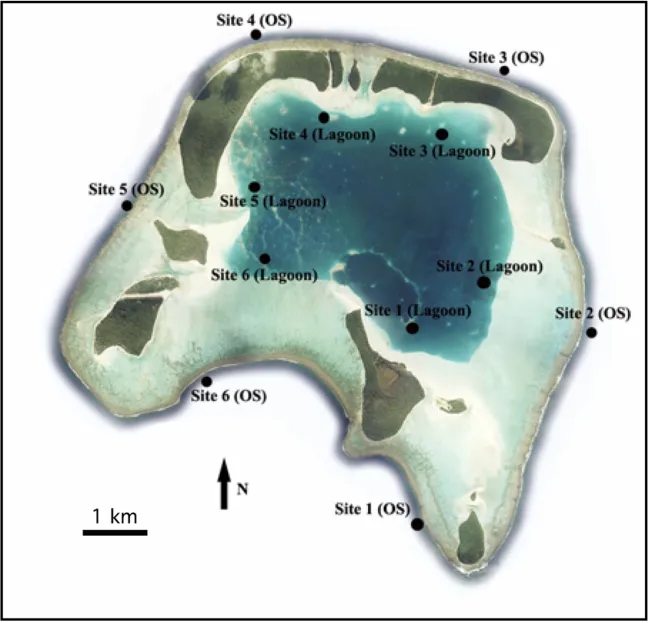
Between 15 and 22 December 2025, Mathilde Maslin and Manola Bejarano carried out surveys across twelve stations distributed between the lagoon and the outer reef slope, some located within the Regulated Fishing Zone. At each station, three twenty-five-meter transects were followed to count fish and describe benthic organisms - corals, algae, invertebrates - with species-level identification whenever possible.
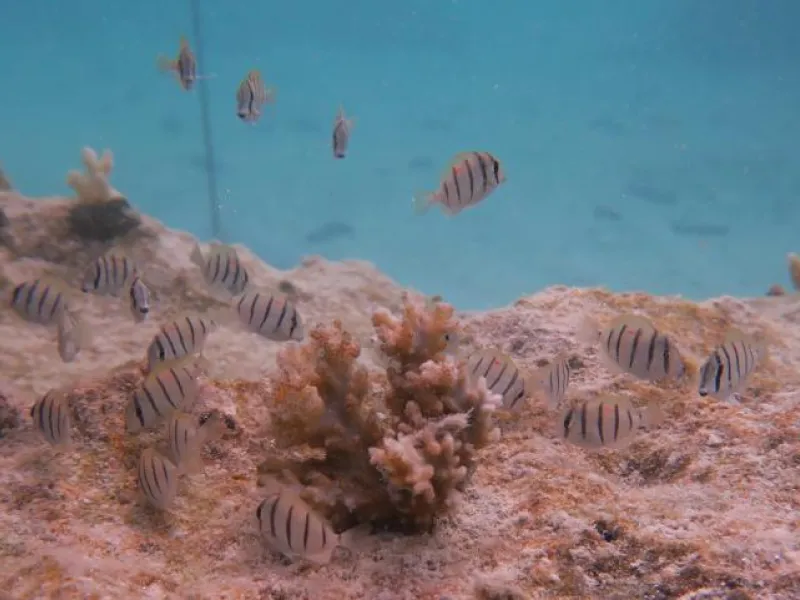
The results show that fish populations are less abundant than in 2015, but remain species-rich, with 136 species recorded and a strong presence of juveniles in the lagoon, indicating its continued role as a nursery area. The outer reef slope remains significantly more populated and diverse than the lagoon, as observed since 2007.
Regarding corals, 35 species were identified on the outer reef slope, dominated by Pocillopora meandrina, and 15 in the lagoon, with Porites lutea and Montipora setosa as dominant species. Coral cover remains stable on the outer slope at 9.4% and shows a slight improvement in the lagoon at 8%, which may reflect the effectiveness of the Regulated Fishing Zone.
Other benthic organisms, such as algae, sponges, and molluscs, are more visible in the lagoon, likely due to lower coral cover. Particular attention is given to the invasive algae Turbinaria ornata, whose increasing presence may alter local ecological dynamics.
Perspectives:
The findings from this campaign confirm the value of continuing this regular monitoring to track reef evolution and understand their capacity to recover after major disturbances over the past decade, including the global bleaching event from 2023 to 2025. The final report has been submitted to the Tetiaroa Society. Sites protected by the Regulated Fishing Zone show positive indicators, reinforcing the importance of maintaining and adapting these protective measures.