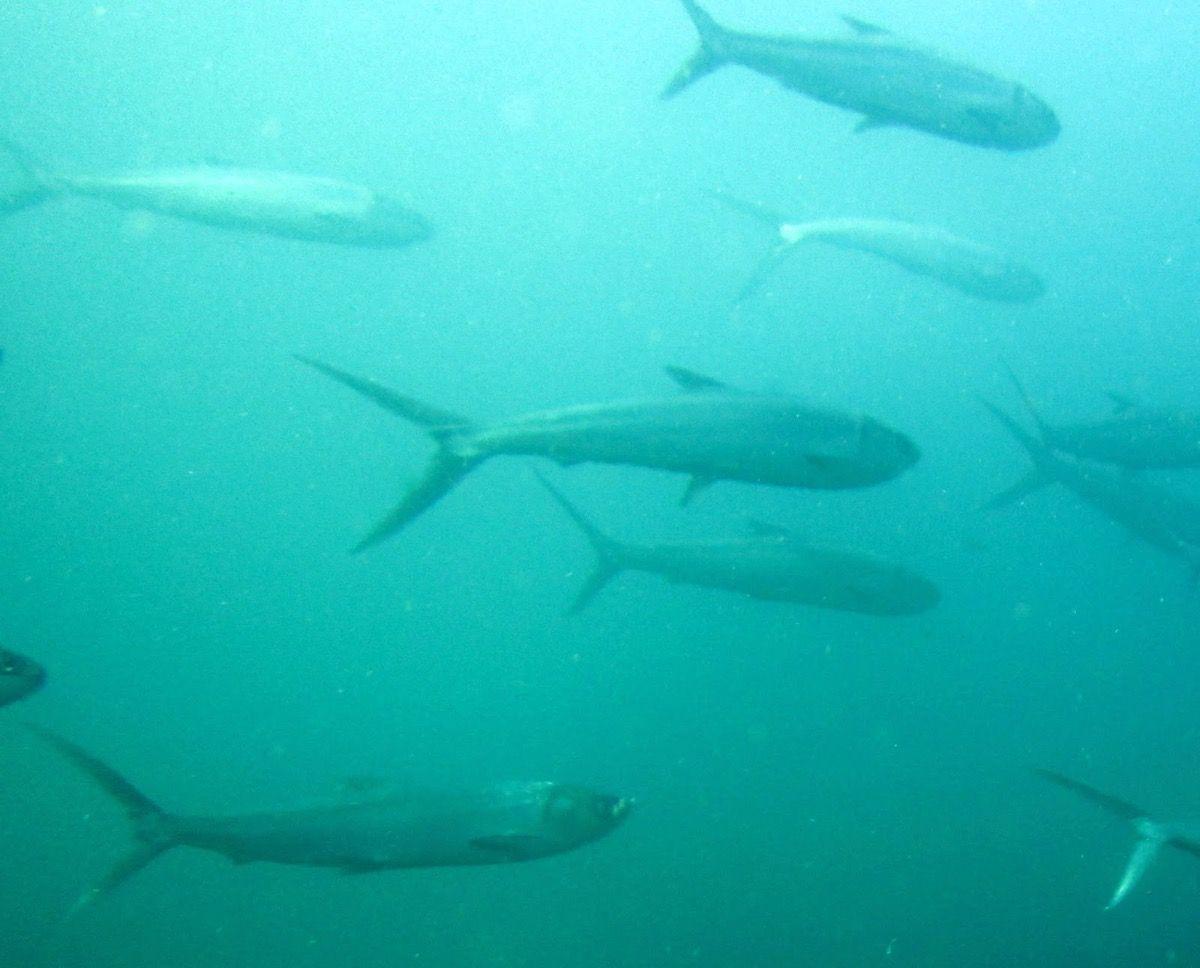
From drifting larvae to silver schools, milkfish move between open water and sheltered coastal nurseries.
- Local names
- 'Ava
About this species
Adults gather in small or large schools near coasts and reefs, often close to the surface. They can be confused with bonefish, Albula glossodonta.
Spawning takes place at night. A female can release as many as five million eggs, which hatch in about a day. Eggs and larvae drift in the water, with the early pelagic phase lasting around two to three weeks.
Young milkfish develop in sheltered coastal habitats before returning to the sea as they mature. Elsewhere in the species’ range, these nurseries include estuaries and mangroves.
Larvae eat zooplankton. Juveniles and adults take soft algae, fish eggs, cyanobacteria and small invertebrates, feeding on material available in the water and near the bottom.
- Guide des poissons de Tahiti et ses îles, Indo-Pacific Fish conference Tahiti 2017, P. Bachet, T. Zysman, Y. Lefèvre, Au vent des îles
- FishBase - Chanos chanos