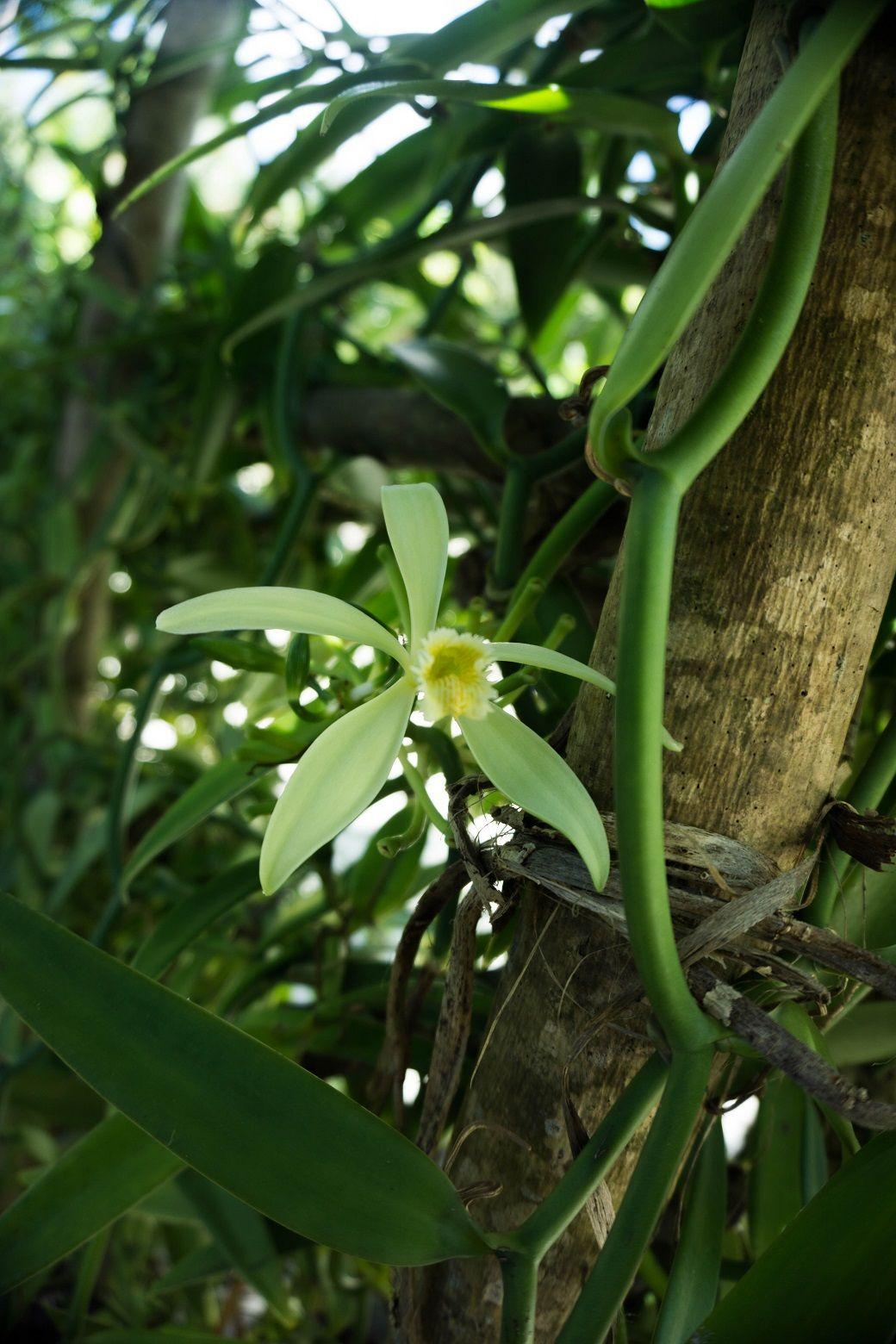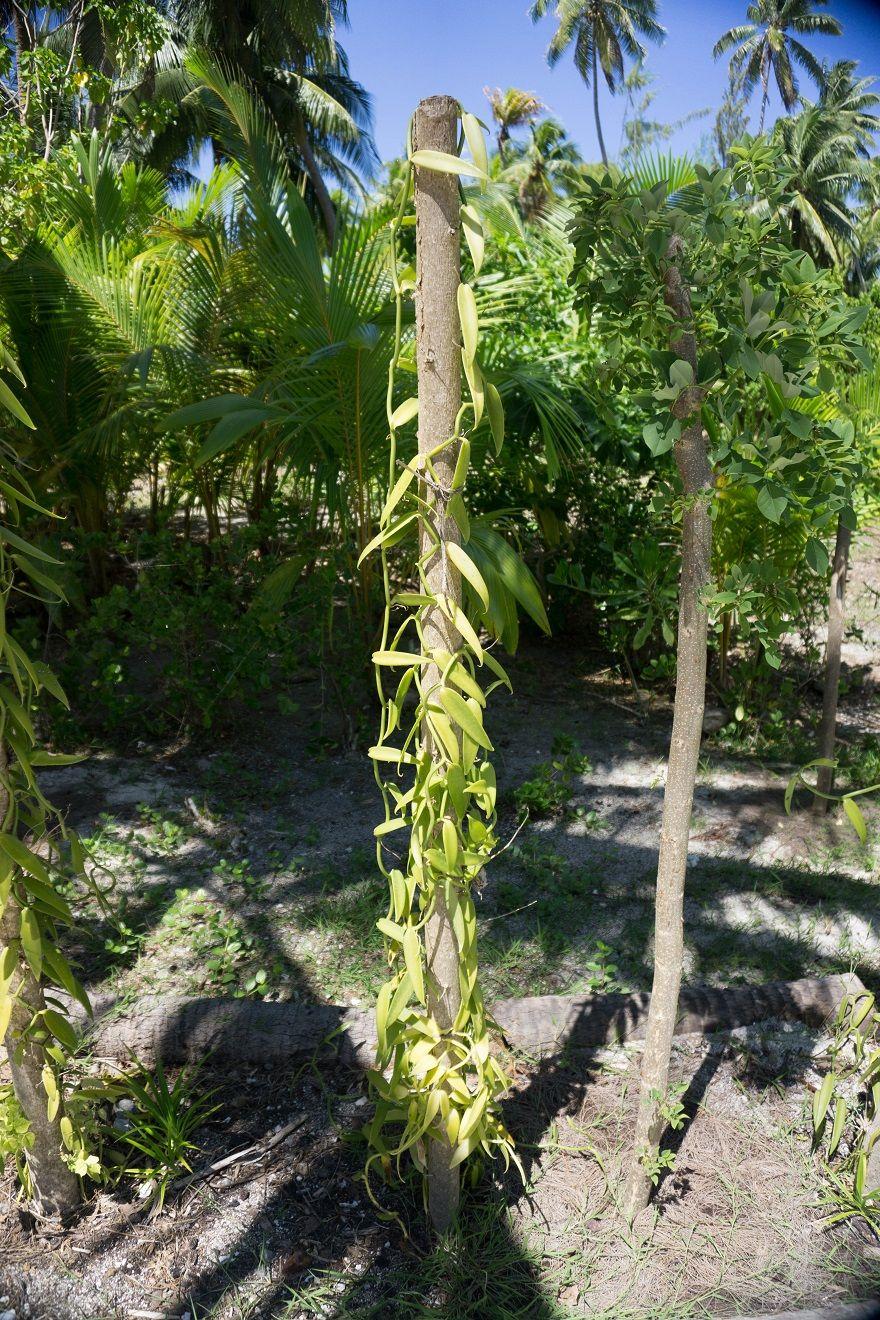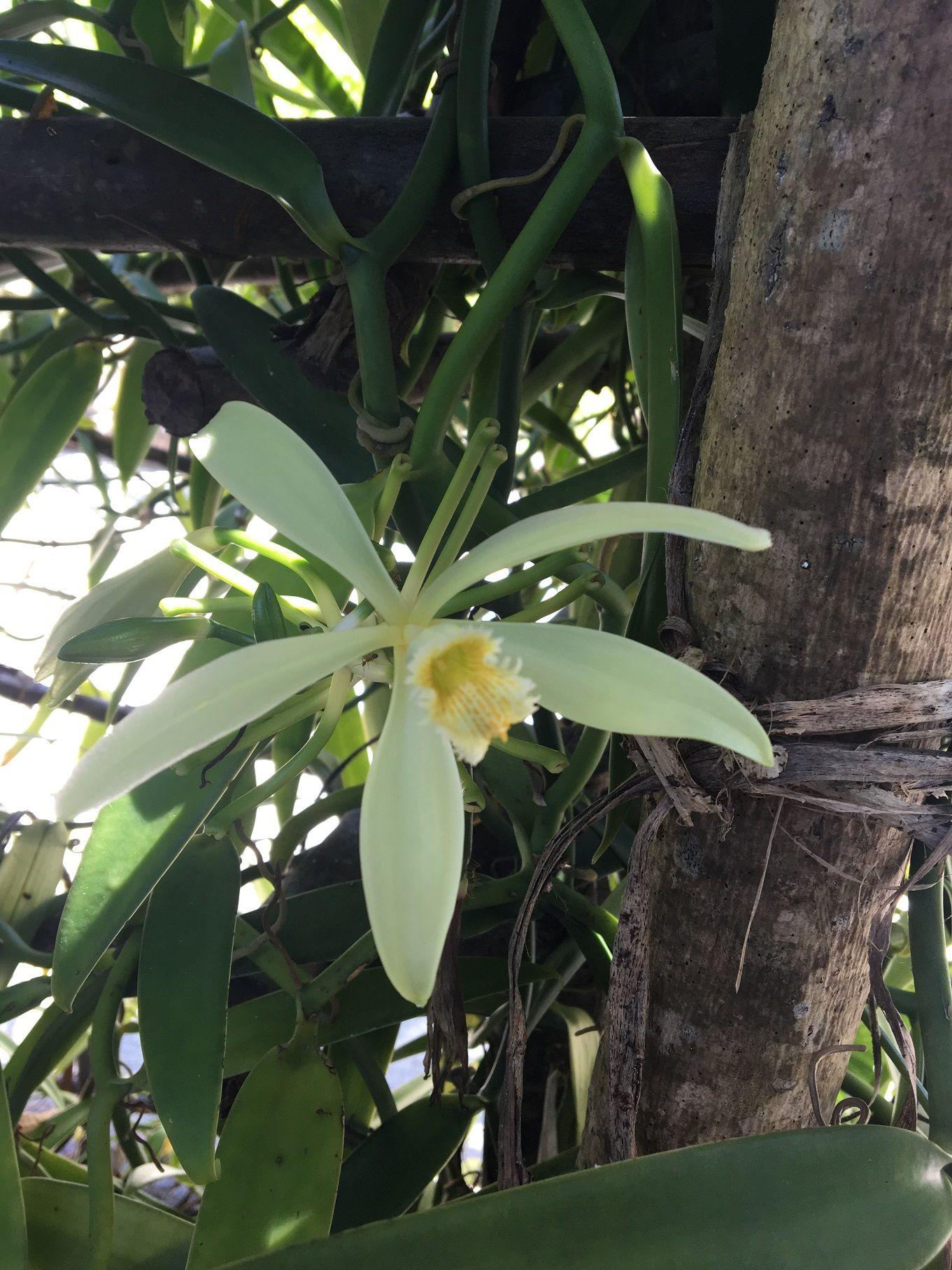
Tahitian vanilla owes its character to both a hybrid orchid and patient work by growers. Each pod begins with a flower pollinated by hand.
- Local names
- Vanira (French Polynesia)
- Habitat
- Motu and shore
- Family
- Orchidaceae
- Biogeographical status
- Modern introduction
- Life form
- Climbing orchid
- Abundance
- Cultivated only on Onetahi
- Ecosystem
- Garden
About this species
Vanilla × tahitensis has ancestry from Vanilla planifolia and Vanilla odorata. The Society’s guide dates an introduction to Tahiti by Admiral Hamelin to 1848 and recalls French Polynesia as the second-largest producer behind Madagascar in the 1950s. It describes a later decline as cultivation became costly.
Tahitian vanilla has an aromatic profile with pronounced anise notes and less vanillin than typical Bourbon vanilla. The source names tahiti, tiarei, haapepe, and potiti among cultivated forms.
The climbing orchid is associated with sheltered, wooded conditions in lower and middle valleys. The source describes plants living around ten years and beginning production after three or four years. Growers pollinate flowers by hand, a practice called mariage. The old guide gives September–December for flowering and pollination; this is a seasonal account rather than a fixed calendar for every crop.
A successfully pollinated flower can produce one pod. Tahitian vanilla is harvested ripe on the vine, unlike vanilla commonly harvested before it splits. The fruit takes about nine to ten months after pollination to reach harvest maturity.
Once harvested at maturity, the pods undergo careful preparation and curing, developing their aroma through repeated handling and drying. This work, along with hand pollination and cultivation, contributes to the cost of the finished spice.