

Field Actions:
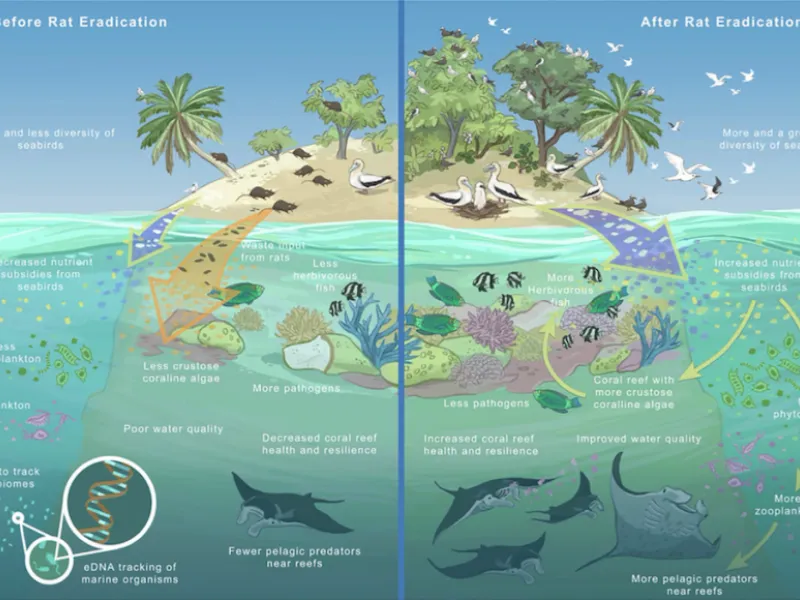
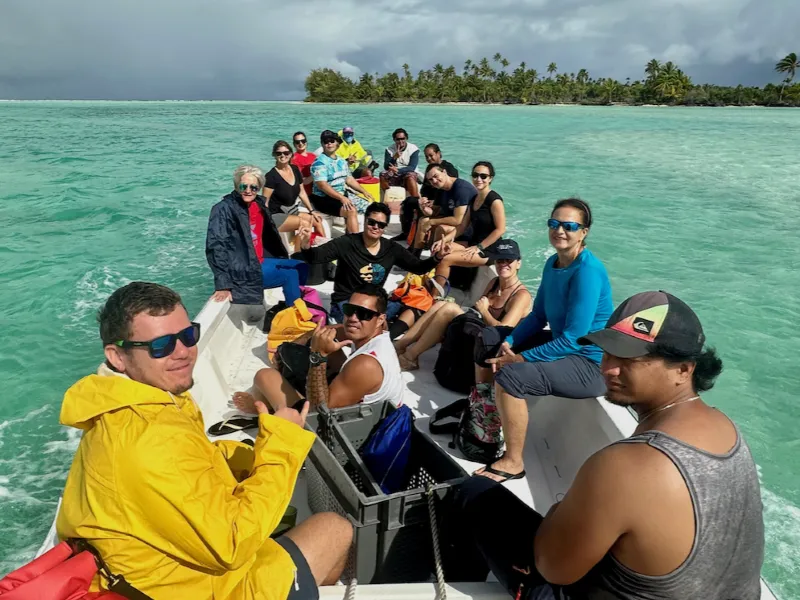
In 2025, several field missions were conducted to monitor on-the-ground changes. Early observations suggest a rapid recolonization of crabs on islets cleared of rats, which may indicate a return of essential ecological functions such as litter decomposition and seed dispersal. Seabirds, particularly masked boobies, have been observed nesting, with confirmed hatchings - encouraging signs, though still under analysis within the broader ecological context. Regarding plants, initial data suggest that tahinu butterfly caterpillars are more abundant in areas with higher seabird presence, but none were observed in February 2025 at certain sites -a potential sign of local population collapse, currently under investigation. Taken together, these observations hint at a possible link between seabird presence, soil fertility, leaf quality, and herbivore abundance -but these relationships remain to be confirmed through further analysis.
Preliminary Results:
Several notable observations were made during this mission:
- A fourth masked booby birth has been confirmed, again at the same nesting site.
- Ghost crabs have been heard calling in their burrows, a rare behavior that has been little studied, and the conditions of its occurrence (moon, time, season, etc.) are currently being thoroughly documented.
- An unprecedented nesting phenomenon of grey-backed terns has been observed, with several dozen pairs settling in at the same time. Unfortunately, these colonies have settled in an area exposed to swell and disturbances caused by visitors.
- A strong presence of birds was observed, much greater than in the previous two years. After the disruptions linked to an epidemic (2023) and El Niño (2024), this season could represent a return to favorable conditions.
The terns are thriving on Tetiaroa
The new images from the camera traps should provide a better understanding of the breeding behavior of crested terns and grey-backed terns, two species that are still poorly documented on the atoll.
Perspectives:
Work will continue to refine observations on crabs and seabirds, using trail cameras and transect surveys. Ongoing analyses will focus on the chemical defenses of tahinu leaves and their potential impact on herbivore populations. A detailed characterization of nesting habitats will also be carried out across 350 transects monitored over several years, to better understand seabird habitat preferences.