les couleurs de l'ocean pacifique

Etude de l'altération du fonctionnement des écosystèmes terrestres par trois espèces introduites sur un atoll polynésien

Jayna at work

Etude de l'altération du fonctionnement des écosystèmes terrestres par trois espèces introduites sur un atoll polynésien

Ce projet vise à comprendre comment la présence de trios d'espèces introduites influence la dynamique des écosystèmes terrestres de Tetiaroa, en particulier à travers leurs effets sur les crabes terrestres, les oiseaux marins et l'équilibre global du motu. Juin 2025 : abeille mellifère (Apis mellifera), cocotier (Cocos nucifera) et moustique Aedes polynesiensis Juillet 2025 : rats, fourmis folles jaunes (Anoplolepis gracilipes) et cocotiers Août 2025 : abeille mellifère, cocotier et moustique Aedes polynesiensis

L’équipe de recherche : Michael Demortier, Simon Ducatez, Jayna DeVore
Collaborateurs : Université de la Polynésie française, UMR 241 SECOPOL (UPF, IFREMER, ILM, IRD), Délégation à la Recherche de Polynésie française, Tetiaroa Society, ANR invecof
Dates: juin 2025 - en cours

  Derniers progrès de la mission de 10 nov 2025 - 26 nov 2025

Main objectives: 

The disruption of ecosystem functioning following the introduction of invasive alien species is particularly damaging, both for the environment and for economic activities. This project aims to characterize the effects on biodiversity and ecosystem functioning of three species introduced on numerous islands in French Polynesia. Using the Tetiaroa atoll as a natural laboratory, we will focus on the coconut palm Cocos nucifera, which is the target of a management plan on the atoll, the mosquito Aedes polynesiensis, which is the target of a future eradication program in Tetiaroa, and the honeybee Apis mellifera, whose ecological functions on the atolls remain unknown. 

This thesis will study certain effects of these species on land crabs, soil fauna, seabird and pollinating insect communities, and on a series of key ecosystem functions (nutrient flow, litter decomposition, pollination). This project will thus facilitate decision-making regarding the management of introduced species by anticipating the likely indirect effects of management measures. Developed for and with Michaël Demortier, a student who aspires to pursue an academic career in the field, and with Hervé Bossin (ILM), this thesis will bridge three ongoing projects led by various organizations with complementary expertise: the InvEcoF project, led by IRD and UPF and financially supported by ANR; the TAME project, led by ILM and Pacific Beachcomber; and the TARP project, led by Tetiaroa Society FP. 

Summary of fieldwork: 

Image
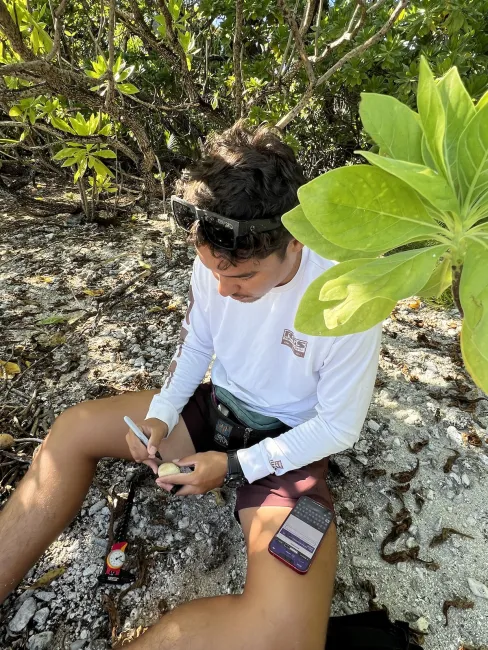
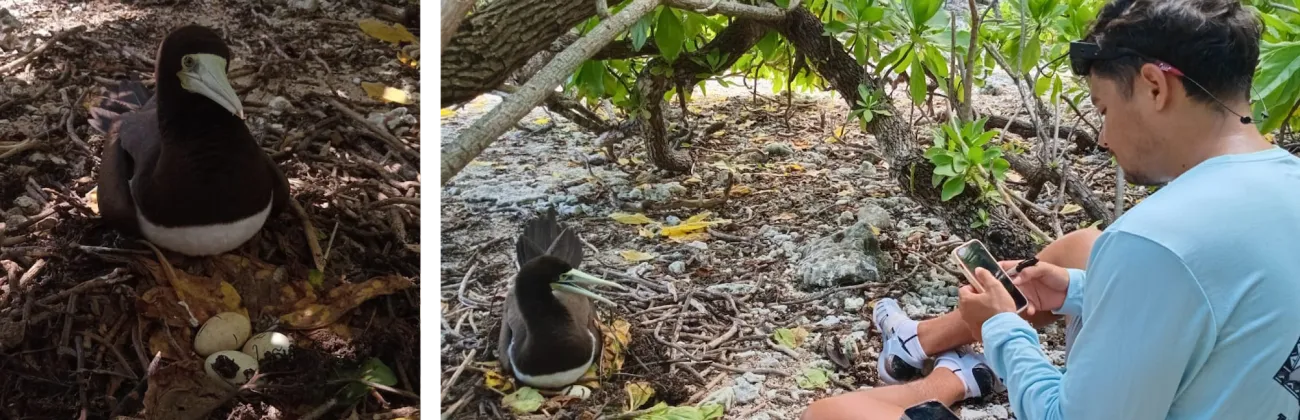
Michael measuring and counting brown booby eggs

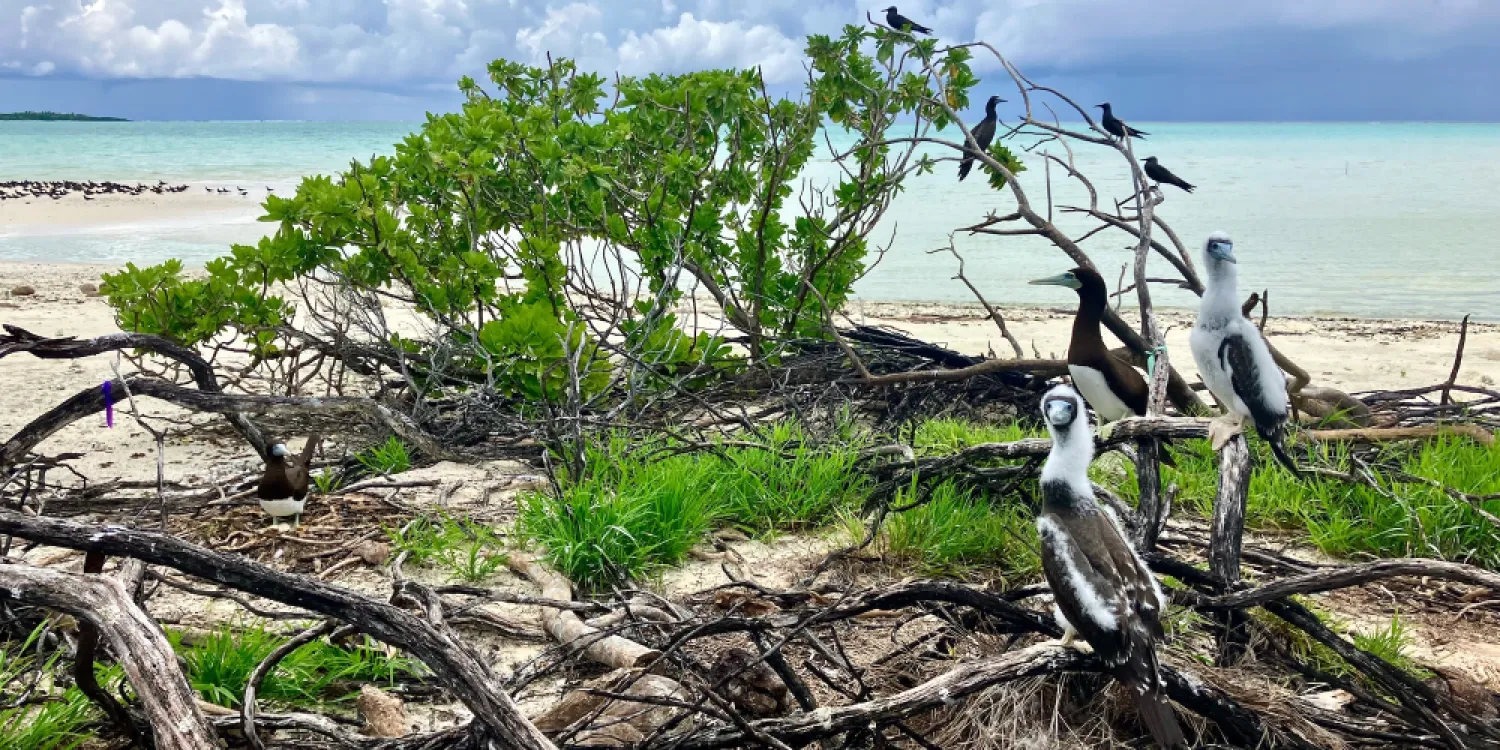
An inventory of brown booby (Sula leucogaster) nests was carried out on the three motu hosting the largest breeding colonies, namely Horoatera, Tiarauunu, and Tahuna Iti. The aim of this action was to assess the impact of mosquitoes on the reproductive success of the species. 

Image
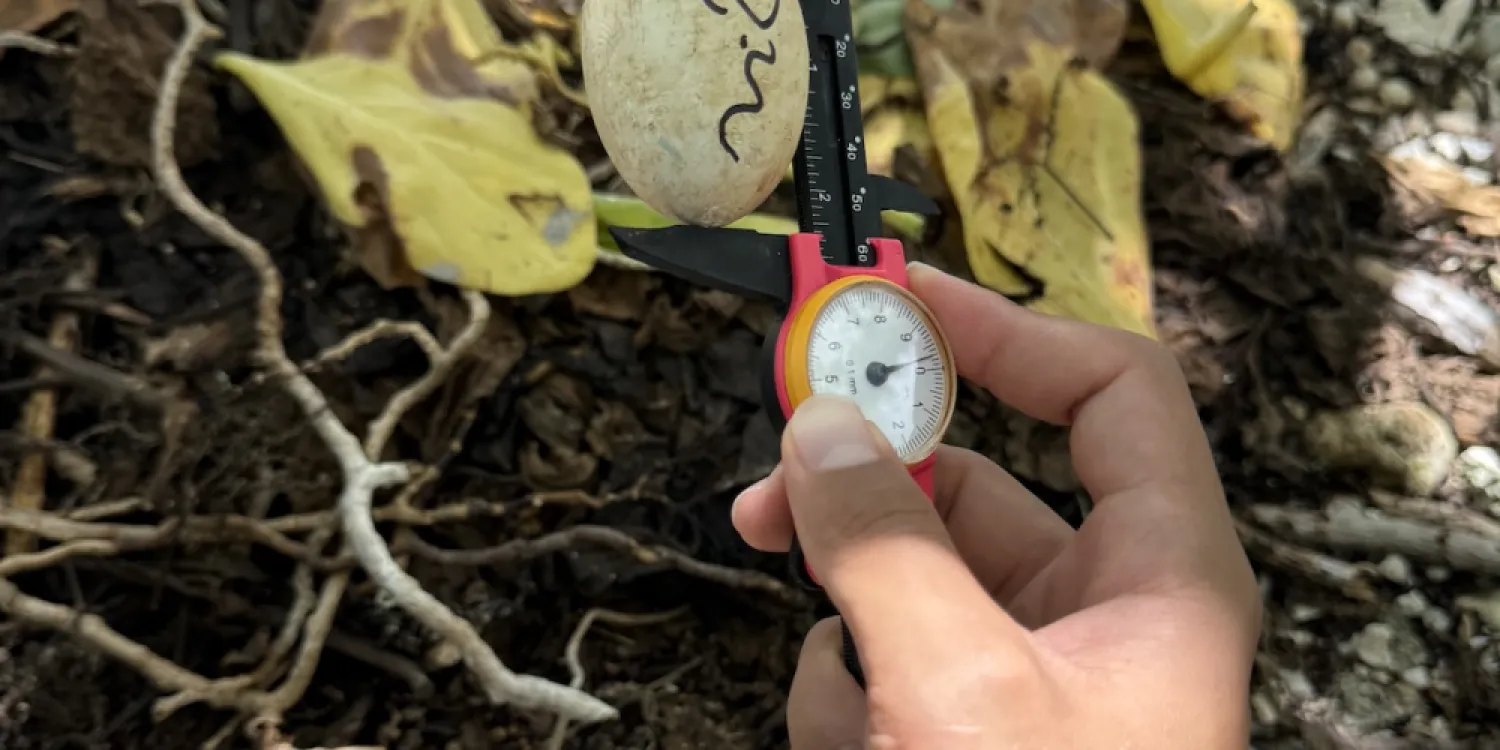
measuring an egg
Image
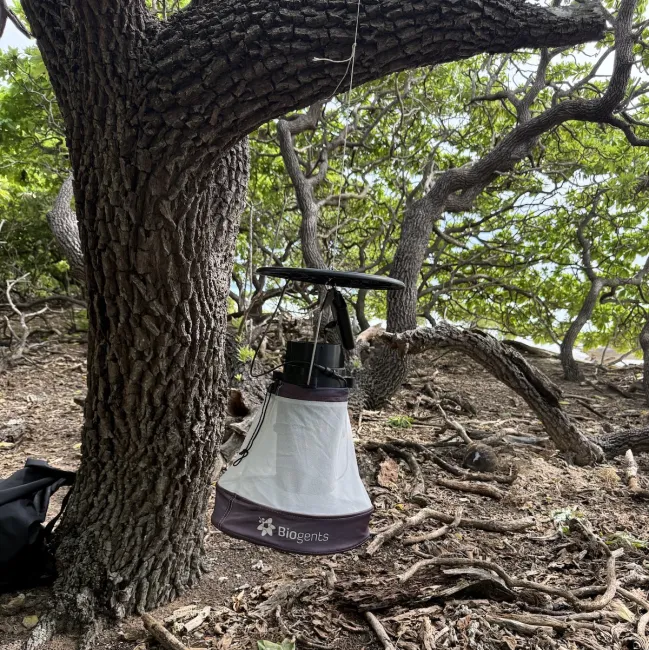
piege BC-Pro

Mosquito capture campaigns were conducted simultaneously within the colonies. Cameras were installed near the nests to document any irritation or stress behaviors related to high mosquito density. 

Several parameters were measured, including the distance from the nests to the vegetation line, the size of the eggs laid, and the development of the hatched eggs, from hatching to the flight stage. 

Mosquitoes were captured within the colonies of the three motu in triplicate using BG-Pro traps, provided by Hervé Bossin's team (ILM de Paea). Targeted captures were also carried out directly at individual nests using adhesive devices. 

Preliminary results: 

Between January and July 2025, a total of 590 brown booby (Sula leucogaster) nests were recorded. The distribution of nests varies according to the sites studied, with 176 nests on Tahuna Iti, 265 nests on Horoatera, and 149 nests on Tiarauunu. 

Outlook: 

The next steps in the project will involve in-depth analysis of the data collected and correlating the nest inventory results with data from mosquito captures to assess their potential influence on the reproductive success of brown boobies (Sula leucogaster). 

This analysis phase will be part of a scientific collaboration with Beth Gardner and Sarah Converse's team, aiming to cross-reference ecological parameters measured in the field with indicators of reproductive success. 

In addition, a new field campaign is planned for October–November, in connection with the study of Tahinu phenology, in order to integrate seasonal vegetation dynamics into the interpretation of interactions between habitat, mosquitoes, and brown booby reproduction.


  Derniers progrès de la mission de 7 Juil 2025 - 28 Aoû 2025

The alteration of ecosystem functioning following the introduction of invasive alien species is particularly damaging, both for the environment and for economic activities. This project aims to characterize the effects of three introduced species on biodiversity and ecosystem functioning across many islands of French Polynesia. Using the Tetiaroa Atoll as a natural laboratory, we will focus on the coconut palm Cocos nucifera, which is the target of a management plan on the atoll; the mosquito Aedes polynesiensis, which is the target of a future eradication program on Tetiaroa; and the Western honey bee Apis mellifera, whose ecological functions on atolls remain poorly understood. 

This PhD project will investigate the effects of these species on terrestrial crabs, soil fauna, seabird communities, and pollinating insect communities, as well as on a set of key ecosystem functions (nutrient fluxes, litter decomposition, and pollination). The project will thereby support informed decision-making regarding the management of introduced species by anticipating the likely indirect effects of management actions. 

Developed for and with Michael Demortier, a student aiming to pursue an academic career in French Polynesia, and in collaboration with Hervé Bossin (ILM), this PhD project will build a bridge between three ongoing projects led by institutions with complementary expertise: the InvEcoF project, led by IRD and UPF and funded by the ANR; the TAME project, led by ILM and Pacific Beachcomber; and the TARP project, led by the Tetiaroa Society FP.

Image
installation of cameras and transects

Summary of field activities

A survey of brown booby (Sula leucogaster) nests was conducted on the three islets (motu) hosting the largest breeding colonies, namely Horoatera, Tiarauunu, and Tahuna Iti. This activity aimed to assess the impact of mosquitoes on the species’ reproductive success.

Mosquito trapping campaigns were conducted simultaneously within the colonies. Cameras were installed near nests to document potential irritation or stress-related behaviors associated with high mosquito densities. 

Several parameters were measured, including the distance of nests from the vegetation line, the size of laid eggs, and the monitoring of hatched eggs from hatching through to the fledging stage. 

Mosquitoes were captured within the colonies on the three motu in triplicate using BG-Pro traps provided by Hervé Bossin’s team (ILM, Paea). Targeted collections were also conducted directly at individual nests using adhesive devices.


Two main missions were carried out in July and late August 2025, bringing together three researchers in the field. These campaigns aimed to ensure post-eradication monitoring of crabs, seabirds and vegetation on several motu of the atoll.
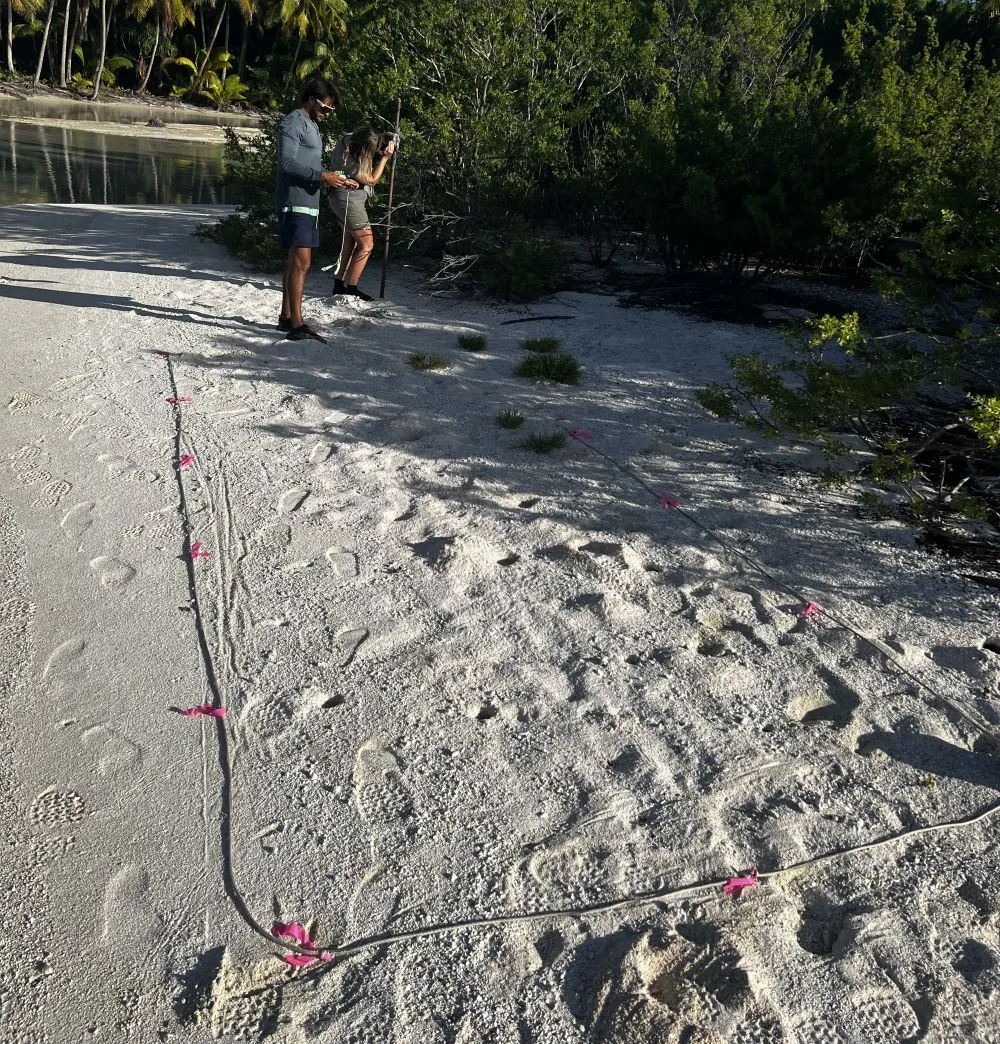
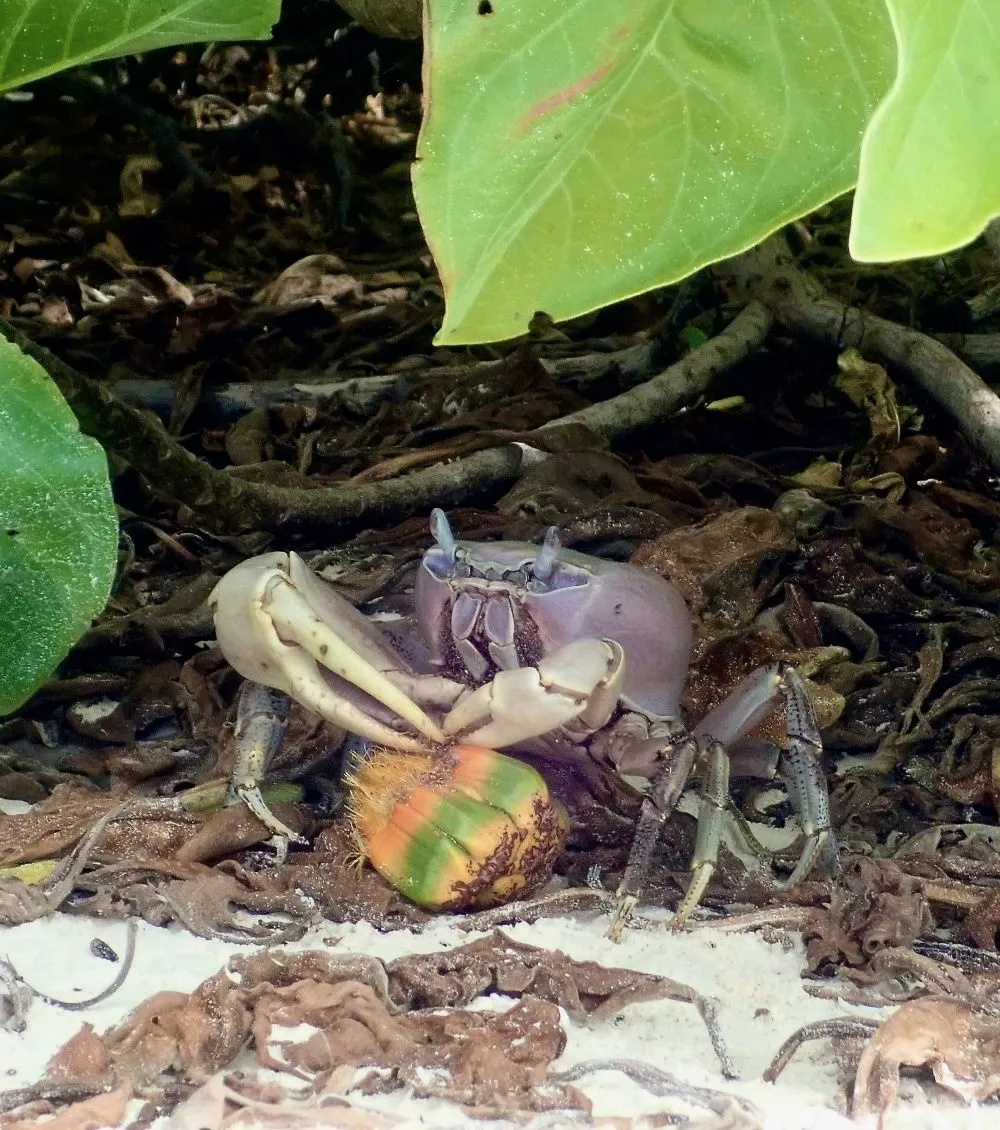
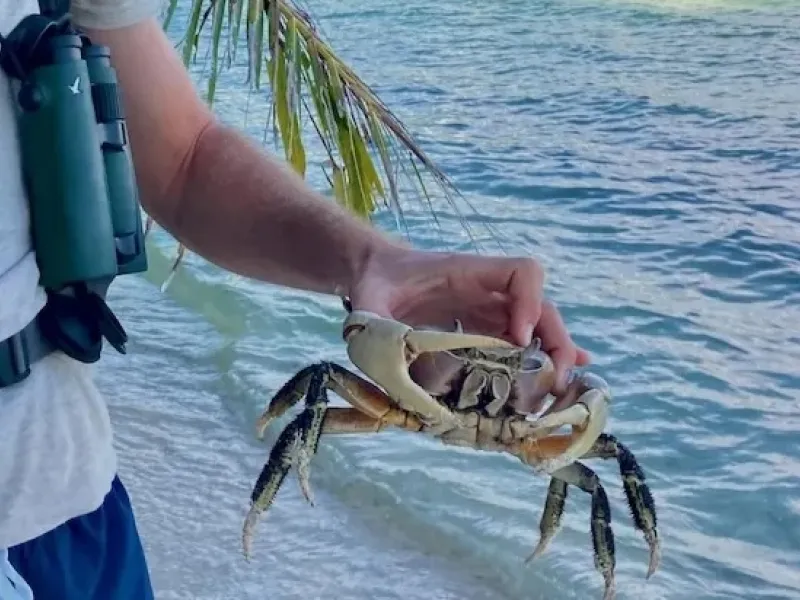
In July, the team conducted capture-mark-recapture sessions of crabs on six beaches to estimate population sizes and analyze the morphology of the different species. These surveys, initiated before the 2022 eradication, now make it possible to measure the changes observed since the disappearance of the rats, particularly among ghost crabs. At the same time, the vegetation was characterized along 25 kilometers of coastal transects used since 2021 for monitoring seabirds.
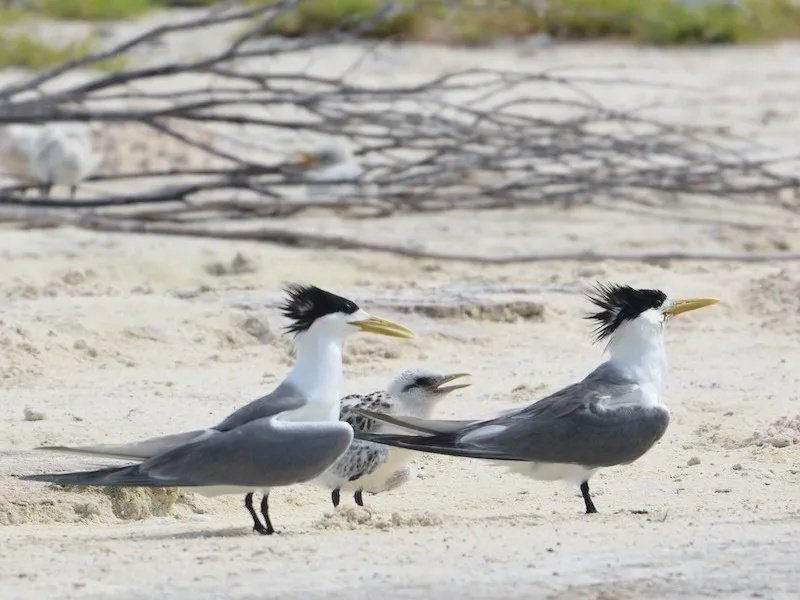
The researchers also carried out maintenance on the camera traps—replacing batteries and SD cards—used to monitor the reproduction of the main seabird species, including red-footed boobies, lesser and Pacific frigatebirds, gray-backed terns, brown noddies, sooty terns, masked boobies, and great crested terns.

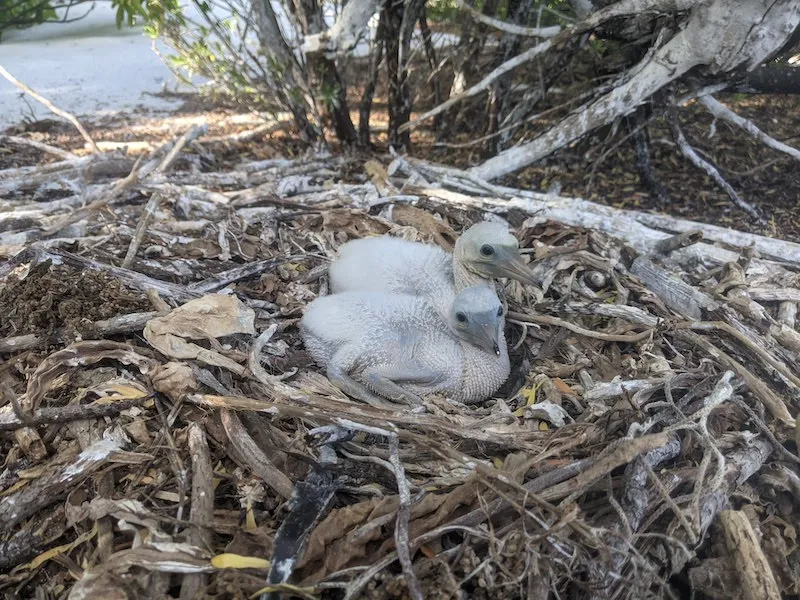
Image
2 booby chicks

Camera traps were also installed on the sampled beaches, and acoustic recordings were made for two species of ghost crabs. During the late August mission, vegetation characterization was completed along the last ten kilometers of coastal transects. The researchers recovered the camera traps installed in July and continued monitoring brown booby nests, in collaboration with the team of B. Gardner and S. Converse from the University of Washington. Sites were selected for the ATTRACT program, and several nighttime capture sessions documented the morphology of ghost crabs on two beaches, including one at Tiaraunu, to expand the comparative database. These observations complete a coherent set of ecological monitoring designed to measure the rapid response of terrestrial fauna to the disappearance of introduced predators.

Image
tupa

Impacts and preliminary results

Over the period from January to July 2025, a total of 590 brown booby (Sula leucogaster) nests were recorded. Nest distribution varied among the study sites, with 176 nests on Tahuna Iti, 265 nests on Horoatera, and 149 nests on Tiarauunu.

Initial results confirm a very positive evolution of terrestrial communities on motu cleared of rats. The diversity and abundance of crabs have increased significantly, particularly on islets where black rats were previously present. This rapid recolonization illustrates the central role of crabs in soil rehabilitation and the resumption of natural ecological cycles. Among seabirds, several encouraging signs have been observed. A pair of masked boobies successfully bred again, and the chick observed in August was healthy and about to fledge. This reproductive success demonstrates a gradual return to favorable nesting conditions and supports the idea that restoring terrestrial ecosystems directly benefits the marine species that depend on them. These preliminary results suggest that the eradication of rats on Tetiaroa has already led to a significant revitalization of terrestrial ecological networks, and that prolonged monitoring will allow us to better quantify the magnitude and stability of these changes.

Perspectives / Next steps

The next phases of the project will focus on in-depth analysis of the collected data and on linking nest inventory results with mosquito trapping data, in order to assess their potential influence on the reproductive success of the brown booby (Sula leucogaster). This analytical phase will be carried out in scientific collaboration with the teams of Beth Gardner and Sarah Converse, with the aim of integrating field-measured ecological parameters with indicators of reproductive success.

In addition, a new field campaign is planned for the October–November period, in connection with the study of Tahinu phenology, in order to incorporate seasonal vegetation dynamics into the interpretation of interactions between habitat, mosquitoes, and brown booby reproduction.


Date de début du projet : janvier 2025

Ces espèces sont très présentes dans la région : elles ont soit une valeur économique et sociale importante (abeilles et cocotiers), soit un impact sur la santé publique et le tourisme (moustiques). Pourtant, leurs effets sur la biodiversité, les sols ou les espèces locales restent encore mal connus. Ce projet a pour ambition de produire des connaissances utiles à la restauration de la biodiversité, à la gestion durable des ressources naturelles et à l’adaptation des atolls au changement climatique.

Image
effects of introduced species on Tetiaroa

Résumé des actions de terrain

La mission s’est déroulée du 2 au 16 juin 2025, avec Michael Demortier. Elle s’est concentrée sur plusieurs motu : Tahuna Iti, Horoāterā et Tiaraunu.

Les activités menées comprenaient :

  • le suivi des pontes de fous bruns (Sula leucogaster), pour observer l’évolution du nombre de nids,
  • l’installation de pièges à moustiques autour des nids pour évaluer l’impact potentiel des moustiques sur le succès de reproduction des oiseaux,
  • des mesures environnementales (pH, température, humidité, conductivité) dans des zones dominées soit par des cocotiers, soit par des plantes indigènes,
  • la collecte de litière dans ces zones afin d’analyser la microfaune qui y est présente,
  • la collecte de guano de trois espèces d’oiseaux marins (fous à pieds rouges, fous bruns, noddis bruns),
  • l’installation de caméras à proximité de certains nids pour observer les comportements de reproduction.
Image
Michael Demortier's research study

Résultats préliminaires

Plusieurs constats intéressants ont été faits :

  • Au moins 20 nouveaux nids de fous bruns ont été identifiés sur chacun des trois motu étudiés.
  • La densité de moustiques autour des nids à Tahuna Iti reste très faible, comme lors des deux précédentes missions. Cela contraste fortement avec les densités plus élevées observées sur les deux autres motu. Ces résultats renforcent l’idée que les moustiques peuvent influencer le succès de reproduction des fous bruns.

These results reinforce the idea that mosquitoes can influence the reproductive success of brown boobies.


Une nouvelle mission est prévue à la fin du mois de juillet 2025, avec des objectifs similaires : suivi de la reproduction des fous bruns, suivi entomologique, mesures environnementales, collecte de données sur la litière et le guano, et pose de caméras. 

Ces observations répétées permettront de mieux comprendre les liens entre espèces introduites et fonctionnement écologique des motu, et d’enrichir les données déjà recueillies pour alimenter les futures publications scientifiques.


Image
Brown boobies on Tetiaroa