Students gathered in the shade on Teti’aroa, listening to a Polynesian cultural guide

Become a guardian of land, sea and sky

‘A riro ai ‘oe ‘ei tia’i fenua

An educational and cultural program for young people from Polynesia and around the world

The atoll is our classroom.

How do you grow taro on an island with almost no soil? What can a seabird tell us about a coral reef? On Teti’aroa, questions like these take a class out into the world. Tetiaroa Society welcomes students from Polynesia and around the globe to explore the answers together.

A palm frond becomes a fish between your fingers. A planting pit reveals fresh water beneath the sand. With their teachers and the people who work here, students connect science, Polynesian knowledge and things they can see and try for themselves. There is plenty to bring back to class.

A young man rakes the path between tall taro plants in a māite, a planting pit shaded by palms

Teti’aroa, a place to reconnect with your roots

Archaeological sites · Native plants · Ancestral knowledge

A group of students and teachers hold hands in a circle on the beach as their boat waits in the turquoise lagoon

Welcome to Teti’aroa.

Each stay begins with a welcome ceremony, from the sea to the paepae.

  1. Into the water

    The group enters the sea together for a purification ritual: a symbolic fresh start as the stay begins.

  2. Onto the paepae

    The welcome continues on the paepae, a rectangular stone court where people gather to make agreements and begin partnerships. Here, the class is welcomed as a partner in the days of learning and sharing ahead.

  3. One stone

    An offering is placed before the central stone. Usually, it is a stone brought from home: a small piece of somewhere familiar, and a symbol of the first stone of the group’s partnership with Tetiaroa Society.
What the days are made of

Explore the activities
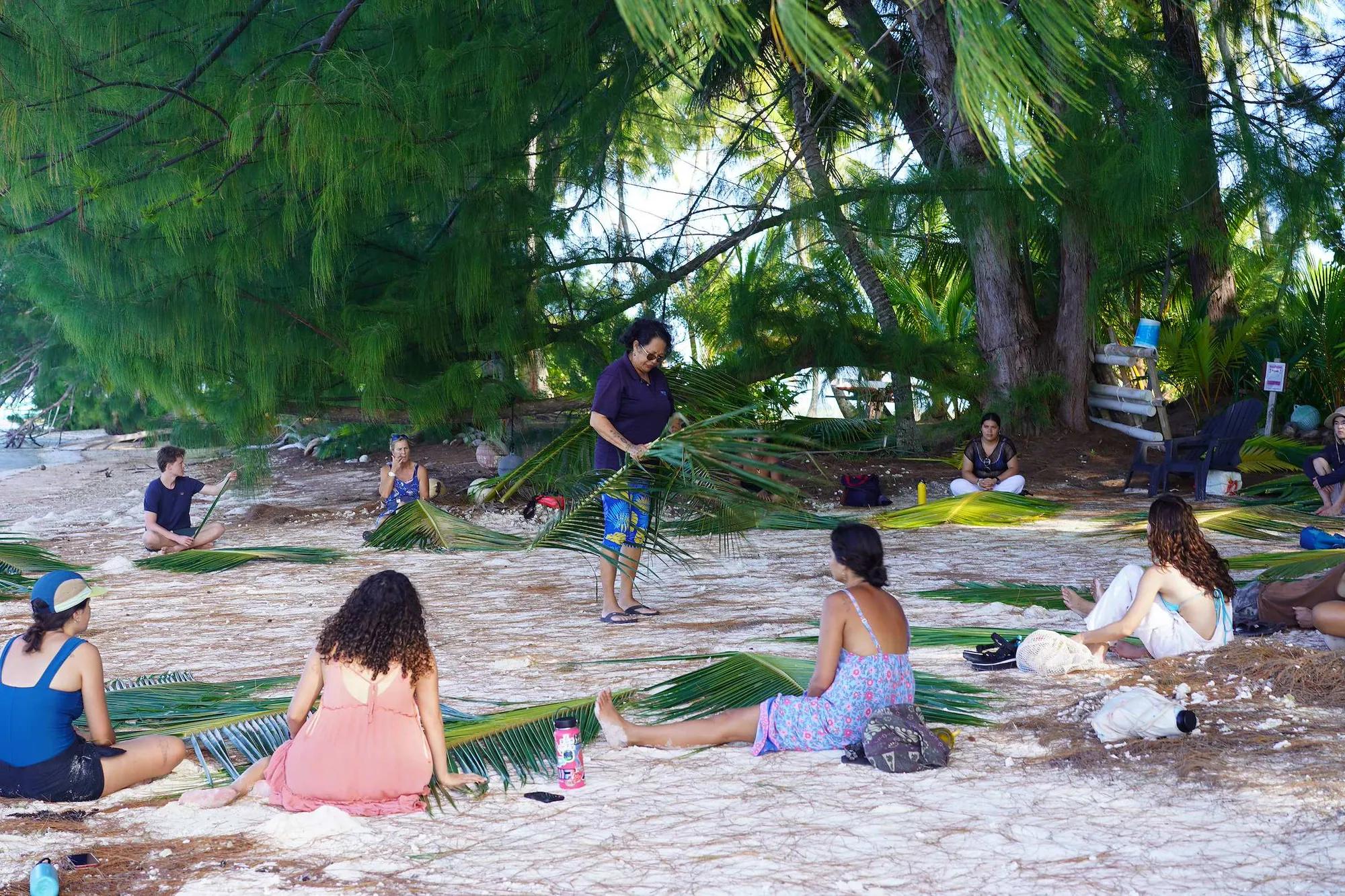
Students sit in a circle on the sand under the trees while a cultural teacher shows them how to weave a coconut frond

Culture

Teti’aroa has long been a gathering place and a sanctuary for Tahitian royalty. Students explore its marae and archery platform, then try skills passed from hand to hand. A coconut frond can become a bracelet, a fish, a headband, a hat or a fan. Together, they build a karuru, a fisherman’s shelter. At the māite, they dig toward fresh water, line the planting pit with leaves and seaweed, and plant a young taro.
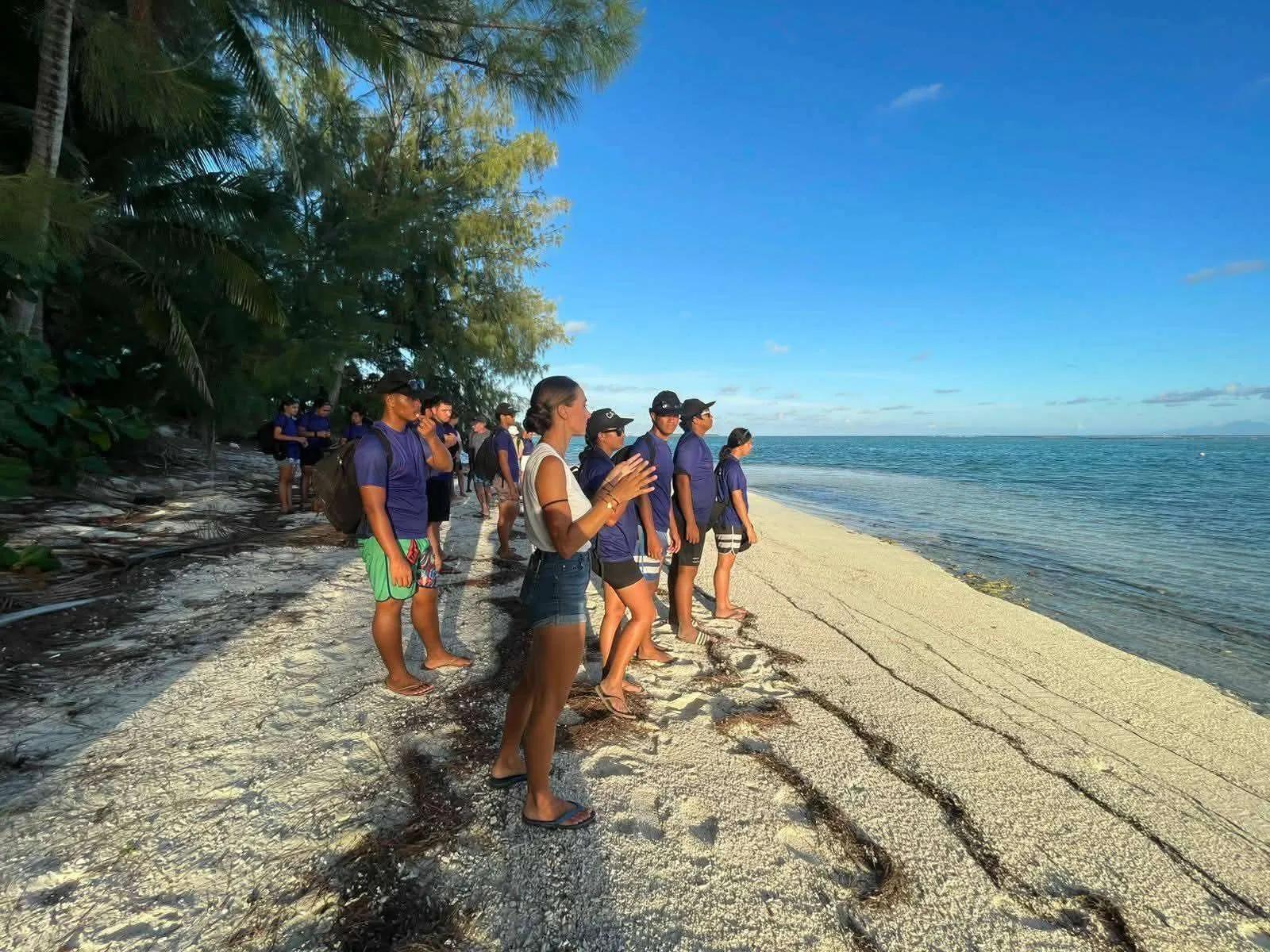
Students line the beach at sunset, looking out to sea as a biologist explains a release of baby turtles

Conservation

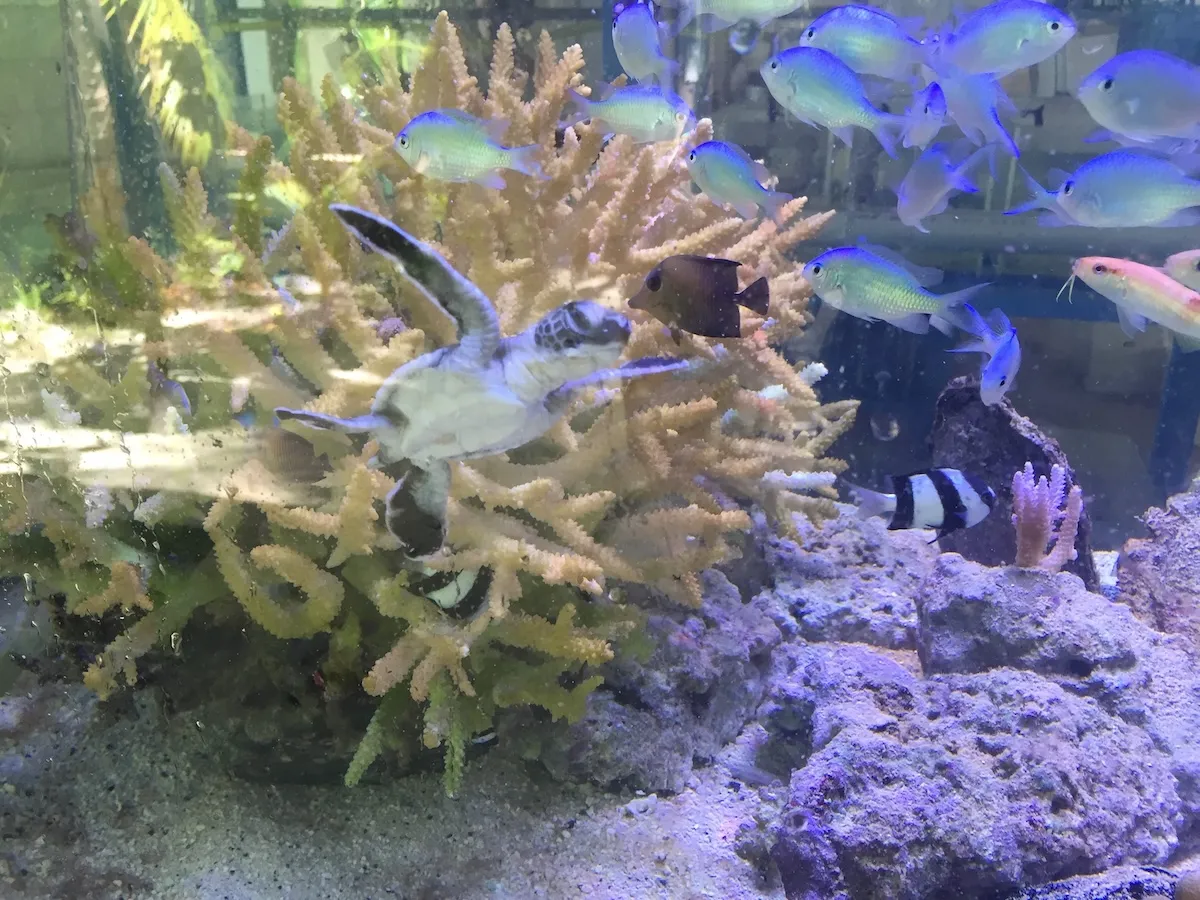
Caring for the atoll starts before a bag reaches the beach. Students discover how biosecurity helps keep invasive species out, and how the Tetiaroa Atoll Restoration Program (TARP) works to remove them and support native wildlife. Depending on who is on site, they may also meet sea turtle specialists from Te Mana o Te Moana or scientists working on the atoll. A chance to ask the people doing the work how it all happens.
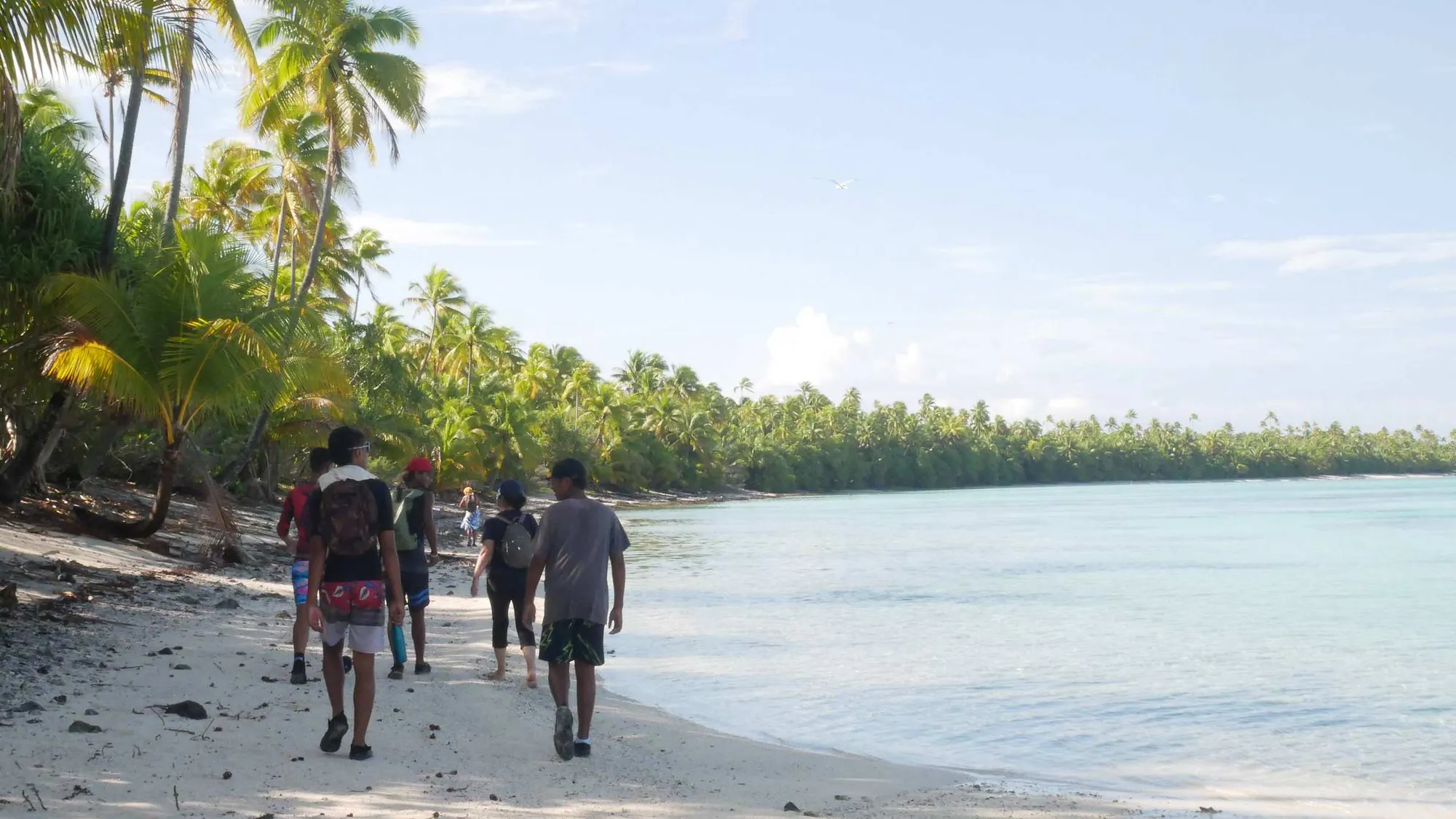
A small group walks along a motu beach between coconut palms and the lagoon, a seabird overhead
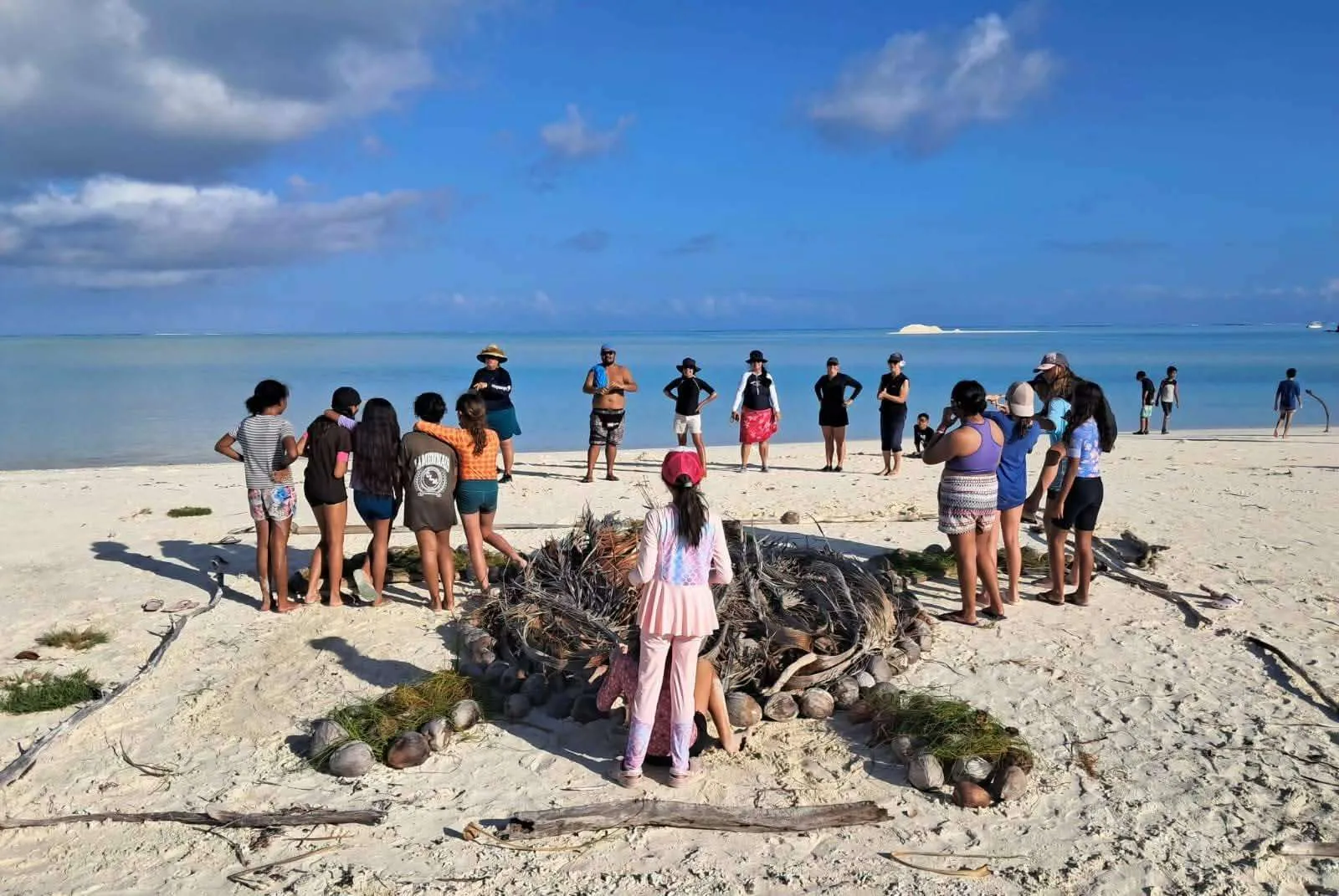
Children stand around a large sea turtle they have shaped on the beach from palm fronds, coconuts and sand

Biodiversity

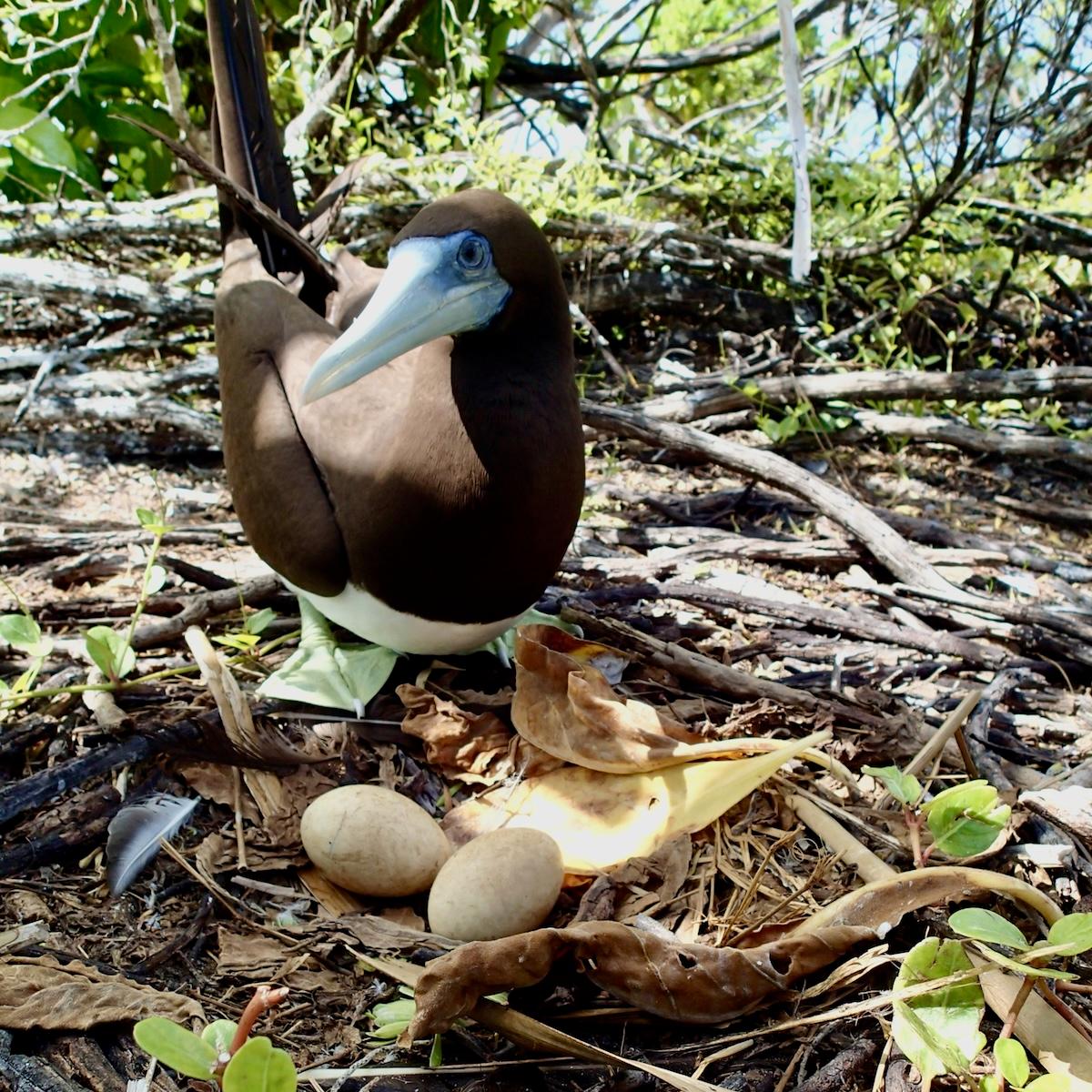
A bird call, a footprint, an empty shell: there is plenty to notice around the old copra farmers’ village. Younger students follow clues to the motu’s wildlife; older groups mark out survey plots and identify what they find. The motu form a nature reserve for seabirds and land crabs. In the lagoon, a regulated fishing zone (ZPR) helps protect reef life. Students explore seabird life cycles, then turn the beach into an art studio. Shaping a life-size sea turtle from sand and shells is a good reason to take a closer look at its anatomy.
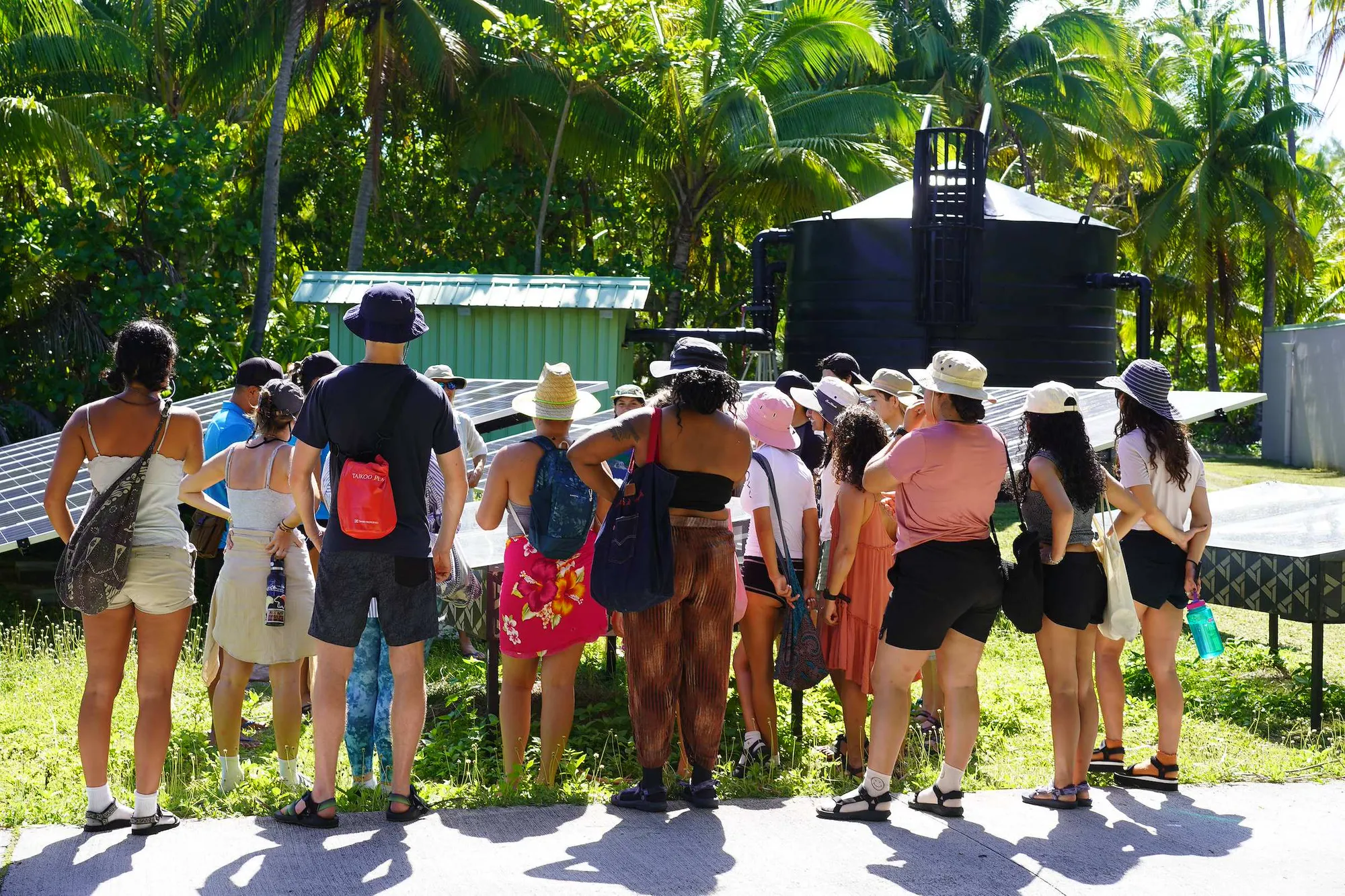
A group of students gathers around solar panels beside a water tank among the palms on Onetahi

Sustainability

How does seawater help cool a building? Where does drinking water come from on an atoll? The Green tour follows everyday needs behind the scenes on Onetahi: solar power, seawater air conditioning (SWAC), reverse-osmosis desalination, fresh water collection and storage, and a food garden. Composting, wastewater treatment, sorting and recycling complete the picture. Even the leftovers have something to teach.

A marae is a canoe that came ashore.

In this telling, the coral stones of the marae connect people, land and sea. The living atoll has connections of its own. Seabirds help nourish the algae within coral, linking life above the water with life below.

Some evenings, the group gathers around a fire to hear legends under the stars. After a day of looking closely, there is time to sit together, listen and look up.
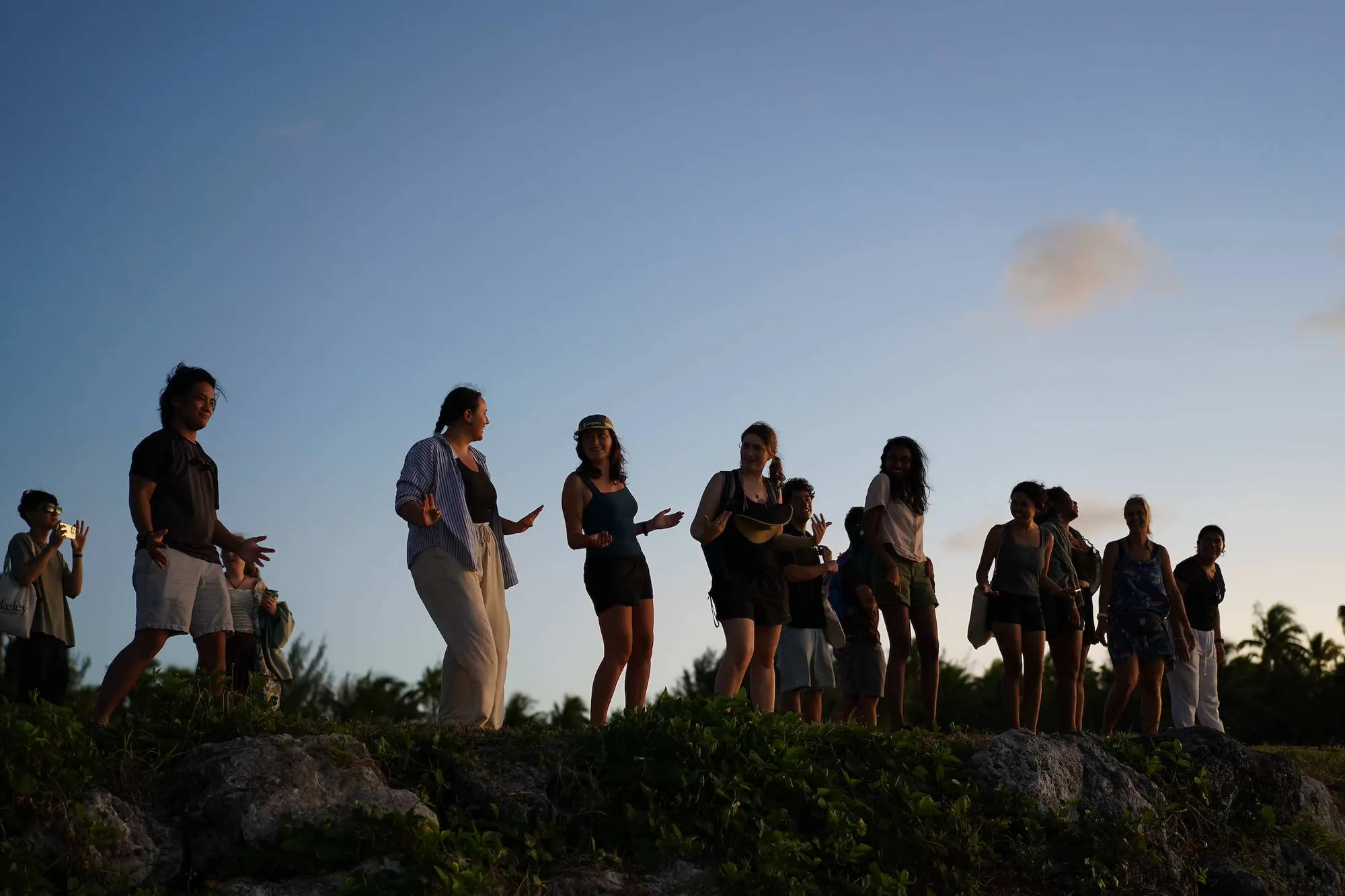
Students dance and laugh on a rise at dusk, silhouetted against the evening sky

Your stay on the atoll

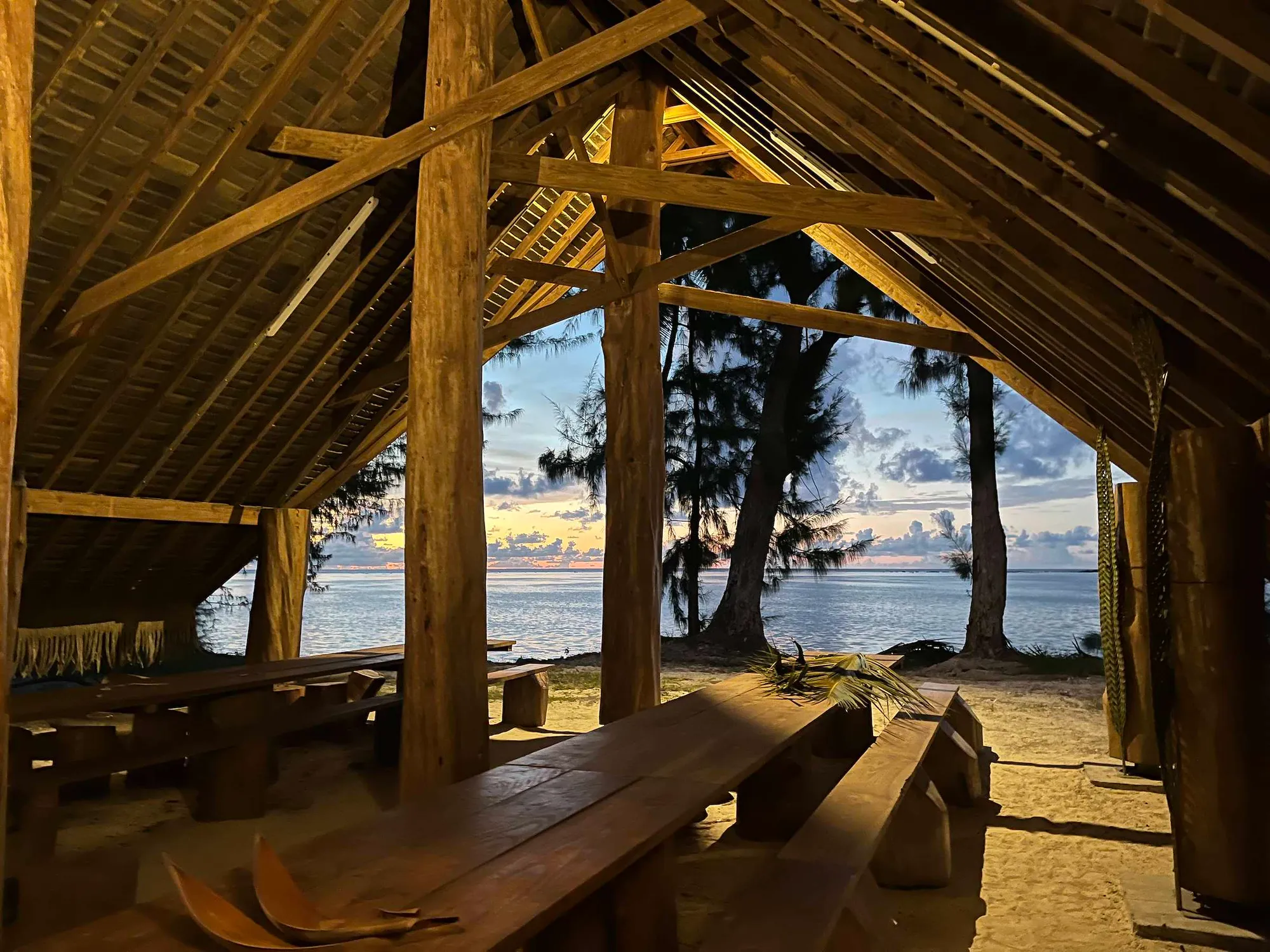
Long wooden tables under the timber roof of the fare pote’e, looking out to the lagoon at dusk
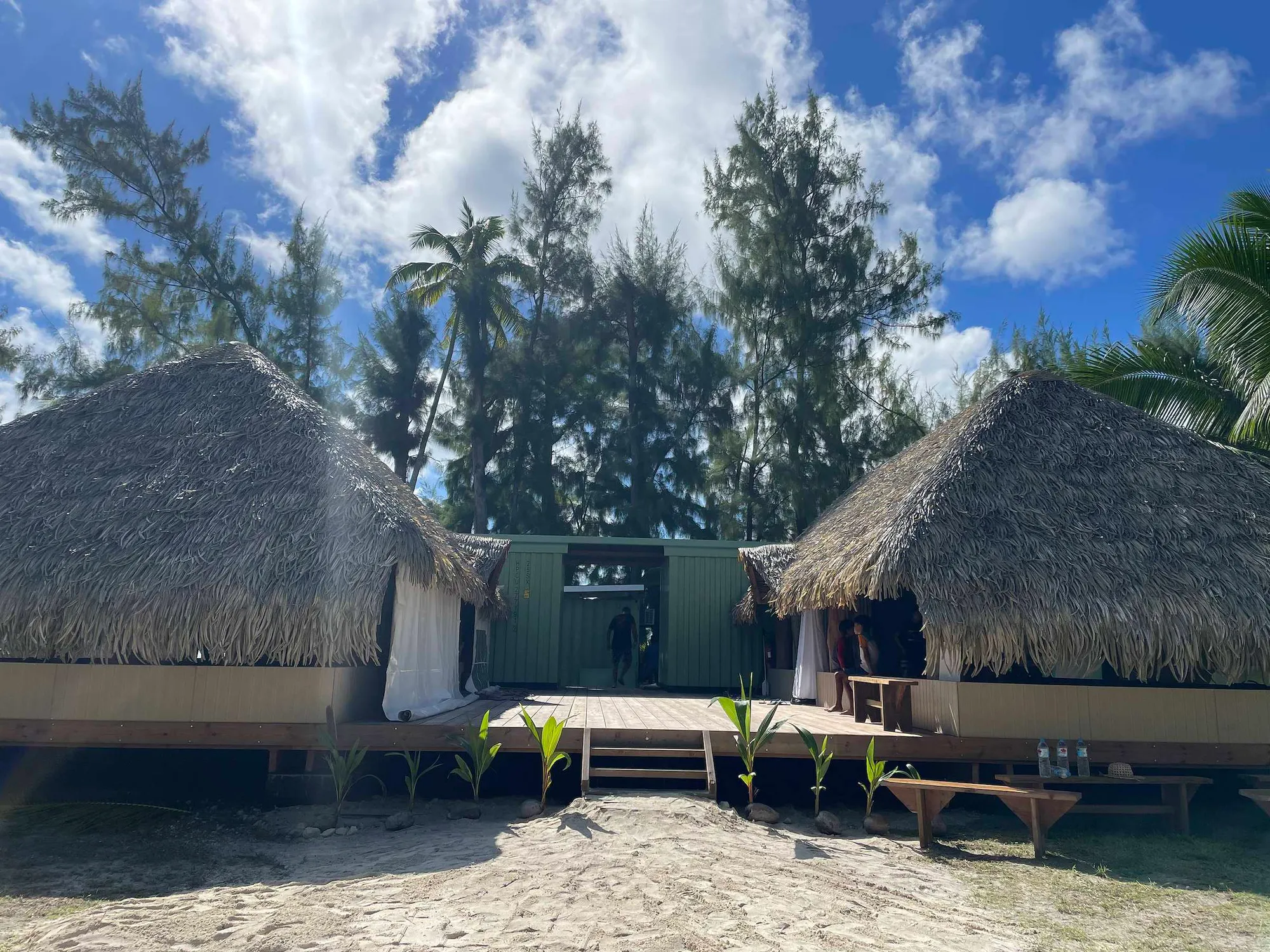
Two thatched dormitories, and a table that faces the sunset.
Accommodation
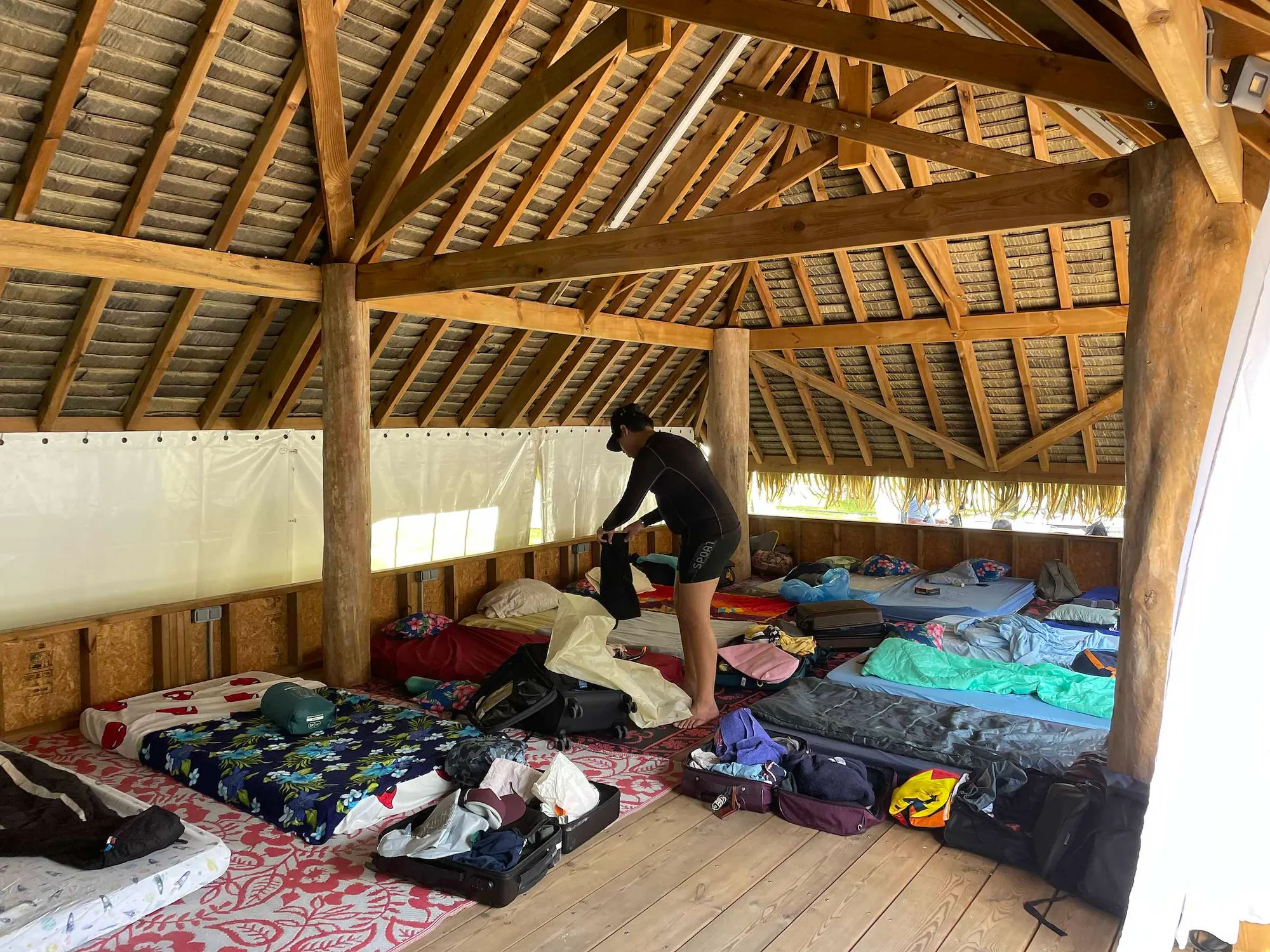
Two dormitories, one for girls and one for boys, each have their own toilet and shower. The fare pote’e, a large traditional thatched shelter, offers shared space for meals and activities between outings.
Getting to the atoll
Most groups come by boat shuttle: about two and a half hours across open water.
Meals
Meals are served at The Brando’s cafeteria.
Biosecurity
Looking after the atoll begins with packing. Bags are checked, and seeds, fruit and animals are not allowed, to help protect the restoration work under way.
Two thatched dormitories joined by a wooden deck, with young coconut palms planted along the sand
Mattresses and open suitcases on the wooden floor of a dormitory, under a timber and thatch roof

Planning a school trip

3–5
days on the atoll
30
people at most, teachers and chaperones included
9–18
years old · grades 4 to 12
1,000+
students have already come to learn on Teti’aroa

They came to Teti’aroa

Local schools

  • Collège Lycée La Mennais
  • Collège-Lycée Anne-Marie Javouhey
  • École de Papara
  • Collège de Tipaerui
  • École de Paopao (Moorea)
  • École de Haapiti (Moorea)
  • Lycée agricole de Taravao
  • Université de la Polynésie française (UPF)
  • RSMA

International schools

  • Lakeside International School
  • California Polytechnic State University (Cal Poly)
  • Berkeley Island Sustainability Program

Building your project with us

A question raised in class can be the beginning of a trip. Share your teaching goals with us, and we will explore how they connect with Tetiaroa Society’s programs. Together, we can prepare a stay that gives your class something to keep exploring back at school.

  1. A first conversation

    We discuss your students’ learning goals and options for funding the trip.

  2. A head start on your project

    We provide pre-filled forms to help you write your school trip proposal.

  3. Time to prepare, together

    Over three or four meetings, we build a project that connects your teaching goals with Tetiaroa Society’s programs.

  4. Approval from the DGEE

    The last step is yours: you submit the project to the DGEE, French Polynesia’s education authority.

Your visit begins before the crossing.

What has your class asking questions this year? Tell us about your students and your project. Let’s explore where a few days on Teti’aroa could take their learning.

Registration form

The registration form isn’t ready yet. Until it is, an email is all it takes to start talking about your class.

Other questions? Write to us.

Helping classes make the crossing.

This program exists because of our funding partner, the Social Capital Foundation (SCF).

With the support of

  • Arue Town Hall
  • DGEE
  • Ministry of Education
  • The Brando