

Main objectives:
The 2025 survey seeks to update baseline data on the status of fish communities, assess medium-term trends associated with the establishment of the Enhanced Protection Zone (EPZ) since 2014, and provide robust scientific indicators to support adaptive management of the atoll.
Summary of field activities:
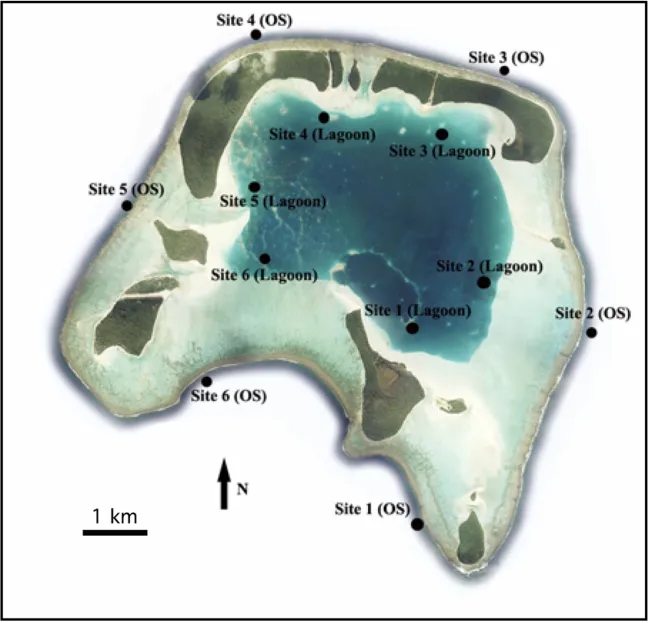
A field mission was carried out from December 15 to 22, 2025, involving two professional divers, Mathilde Maslin and Manola Bejarano. Underwater surveys were conducted at a total of 12 stations, including six lagoon sites and six sites located on the outer reef slope of the atoll.
At each station, 25-meter transects were carried out in triplicate, in accordance with historical protocols. Data collected included ichthyological surveys (fish), focusing on species abundance and diversity, as well as a qualitative description of the benthos (organisms living on the seafloor, such as corals and algae). This field phase provides the foundation for temporal comparisons of fish communities at the scale of the atoll.
Preliminary results:
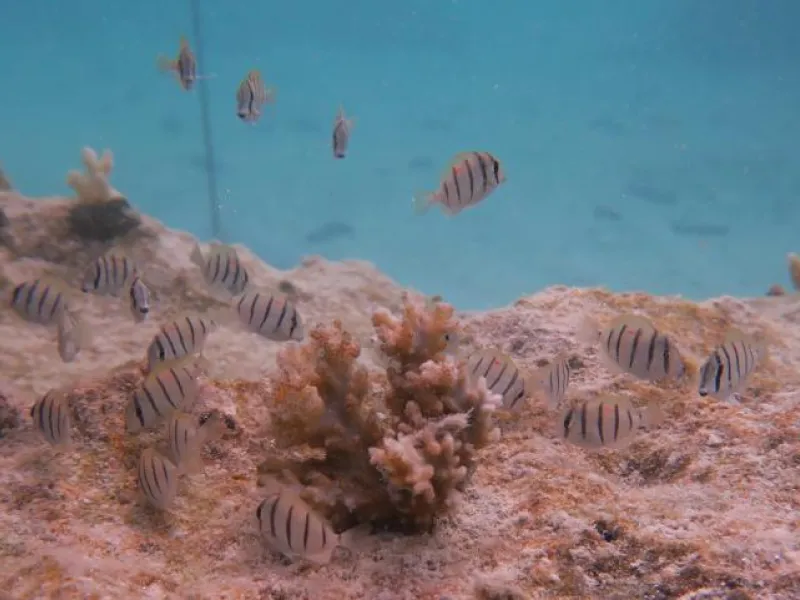
Initial observations from the surveys indicate high coral diversity (a large variety of coral types) and particularly encouraging levels of coral cover. Fish communities show high abundance, with a strong presence of juveniles in the semi-enclosed lagoon, highlighting the key role of this environment as a nursery area (where juvenile fish grow and develop) for many reef species.
Perspectives / Next steps:
The next steps of the project will focus on compiling, analyzing, and formatting the data in preparation for the drafting of the final report. This report will be submitted to the Tetiaroa Society and integrated into RAMS, thereby contributing to the scientific valorization of the data and to the long-term monitoring of the ecological status of Tetiaroa’s reefs. At this stage, no additional fieldwork is planned; however, the results obtained confirm the value of continuing this type of regular monitoring at the scale of the atoll.