

atoll fern

Tetiaroa Atoll Seabird Restoration | ATTRACT

attract project installation

Tetiaroa Atoll Seabird Restoration | ATTRACT

The ATTRACT project, for Tetiaroa Atoll Seabird Restoration, is a major step in the atoll's ecological restoration program. Led by the Tetiaroa Society with support from The Nature Conservancy and the European BestLife2030 program, it aims to encourage the return and recolonization of seabirds on motu where invasive alien species have been eliminated.

Collaborators: Jayna DeVore, research engineer, UPF (UMR SECOPOL, Tahiti) | Simon Ducatez, IRD (UMR SECOPOL, Tahiti) | Solène Fabre, Tetiaroa program coordinator | Joan Robson, scientific program coordinator
Affiliations: BestLife2030, The Nature Conservancy, Tetiaroa Society
Dates: December 20 and 21, 2025

  Update : Tetiaroa Atoll Seabird Restoration | ATTRACT

Main objectives:

The mission conducted on December 20 and 21, 2025, on the Tetiaroa atoll aimed to ensure the maintenance and proper functioning of the automated monitoring devices deployed as part of the ATTRACT project, funded by BESTLIFE2030.

It also aimed to strengthen the monitoring system by installing new cameras at targeted sites in order to increase the number of available viewpoints and optimize the detection of seabird species targeted by the program.

Image
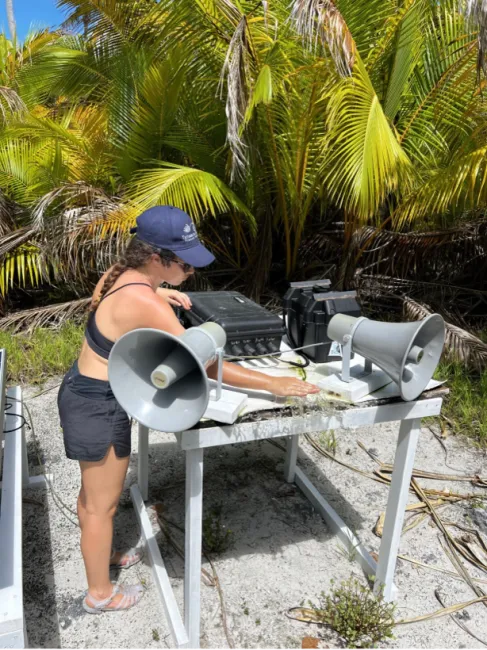
Solène checking that the system is working properly

Summary of fieldwork:

A field mission was conducted on December 20 and 21, 2025, on the Tetiaroa atoll. It consisted of maintaining existing equipment, including replacing SD cards and camera batteries, as well as checking that the sound broadcasting and image capture systems were working properly.

In order to improve coverage of the monitored sites, three new cameras were installed, one on the motu of Rimatuu and two on the motu of Horoatera. The mission also enabled the data already collected to be checked and analyzed by viewing the images from the SD cards, with the aim of detecting the possible presence of the target species.

Preliminary results

At this stage, analysis of the images from the cameras' SD cards does not yet allow conclusions to be drawn about the frequency of visits to the sites by the target species. However, verification of the data collected during the period under review revealed no recorded visits, confirming the need to continue monitoring over a longer period in order to obtain interpretable results.

Outlook:

The next steps will consist of continuing automated monitoring of the equipped sites, analyzing the data collected over longer periods, and adjusting the device deployment strategy (location, number of cameras, technical parameters) if necessary.

These actions will be part of an adaptive approach aimed at optimizing the conditions for attracting seabirds and strengthening our understanding of the factors influencing site visitation, in line with the overall objectives of the BESTLIFE2030 program.
Start date: July 2025

These birds play a vital role in the functioning of island ecosystems, particularly by providing nutrients and regenerating coastal vegetation. By combining social attraction techniques and habitat restoration, the project seeks to accelerate the recovery of these bird communities and the ecological services they provide.

Image
attract installation

Summary of field activities

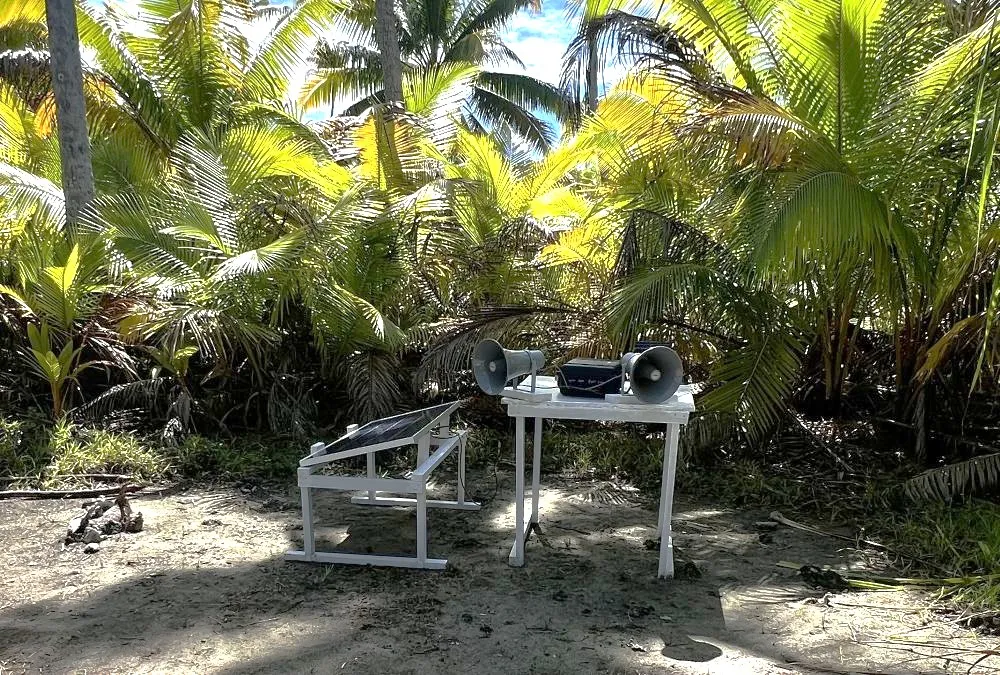
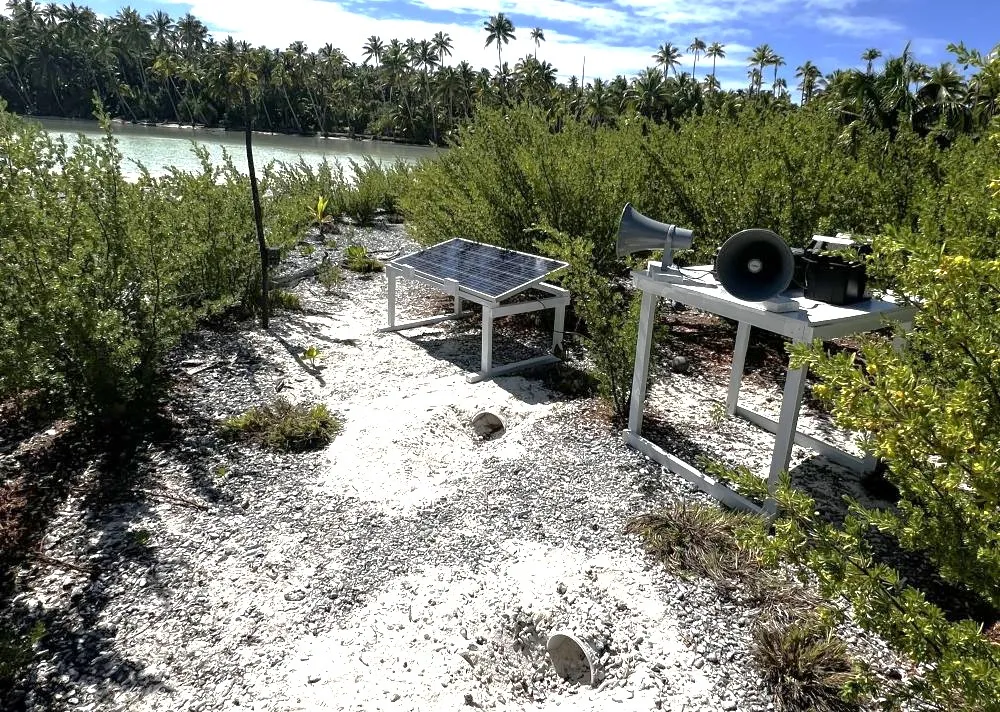
An initial mission, carried out in July 2025, enabled the preparation of the technical installations necessary for the implementation of the attraction. Solène Fabre and Dana designed and assembled on-site the supports for the solar panels, the tables for the speakers and the sound systems, while exploring certain motu to identify the most suitable sites for the installation of the equipment and the diffusion of sounds.

Image
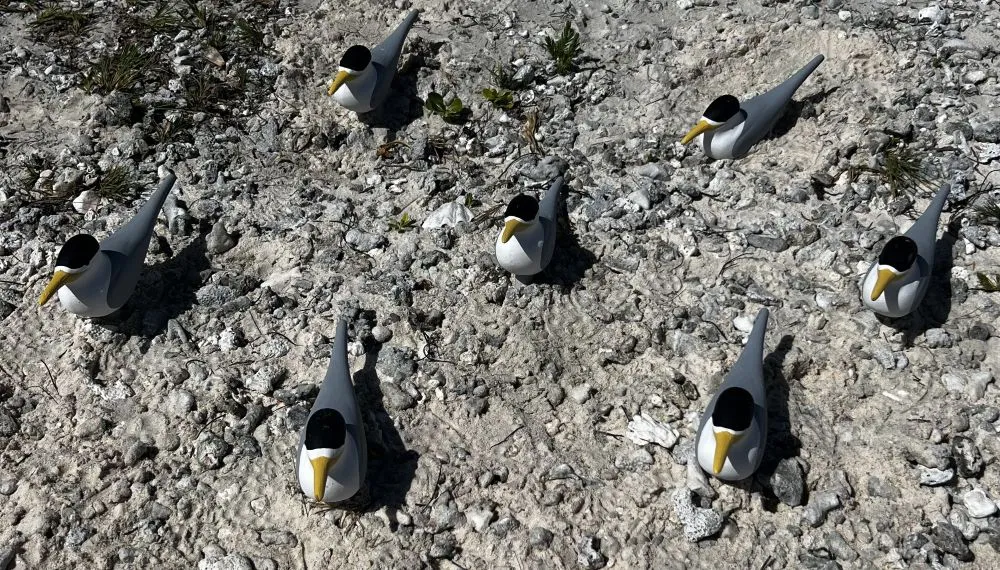
decoys to attract nesting birds

During the August 2025 mission, the team fully installed the sound systems and bird silhouettes used as visual bait at two pilot sites. The equipment was transported and assembled in the field, acoustic tests were conducted, and photo tracking cameras were set up to document site visits. This mission also coincided with the visit of a delegation from the European Union, which came to observe the concrete progress of this exemplary project for island conservation.

Image
attract installation on the motu

Impacts and preliminary results

After a month of operation, the acoustic and visual systems have proven reliable and adapted to the atoll's conditions. Initial observations do not yet indicate active colonization, but the teams are awaiting data from the cameras to confirm the first potential visits. This implementation represents a milestone: it is the first application in Tetiaroa of a social attraction technique already proven elsewhere in the Pacific, notably in Hawaii and New Zealand, and recently introduced in French Polynesia by SOP Manu.

Perspectives

Future missions will focus on analyzing photographic records to assess site attendance and adjusting the devices if necessary. The team plans to return to Tetiaroa at the end of October 2025 to verify the proper functioning of the equipment and to present the project as part of scientific communication and outreach activities. In the longer term, ATTRACT aims to be extended to other motu as their ecological restoration progresses, and to serve as a model for other Polynesian islands wishing to restore their seabird populations.