

Main objectives:
The disruption of ecosystem functioning following the introduction of invasive alien species is particularly damaging, both for the environment and for economic activities. This project aims to characterize the effects on biodiversity and ecosystem functioning of three species introduced on numerous islands in French Polynesia. Using the Tetiaroa atoll as a natural laboratory, we will focus on the coconut palm Cocos nucifera, which is the target of a management plan on the atoll, the mosquito Aedes polynesiensis, which is the target of a future eradication program in Tetiaroa, and the honeybee Apis mellifera, whose ecological functions on the atolls remain unknown.
This thesis will study certain effects of these species on land crabs, soil fauna, seabird and pollinating insect communities, and on a series of key ecosystem functions (nutrient flow, litter decomposition, pollination). This project will thus facilitate decision-making regarding the management of introduced species by anticipating the likely indirect effects of management measures. Developed for and with Michaël Demortier, a student who aspires to pursue an academic career in the field, and with Hervé Bossin (ILM), this thesis will bridge three ongoing projects led by various organizations with complementary expertise: the InvEcoF project, led by IRD and UPF and financially supported by ANR; the TAME project, led by ILM and Pacific Beachcomber; and the TARP project, led by Tetiaroa Society FP.
Summary of fieldwork:
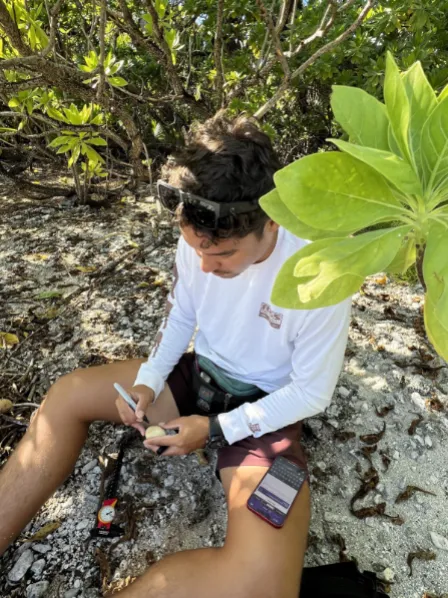
An inventory of brown booby (Sula leucogaster) nests was carried out on the three motu hosting the largest breeding colonies, namely Horoatera, Tiarauunu, and Tahuna Iti. The aim of this action was to assess the impact of mosquitoes on the reproductive success of the species.
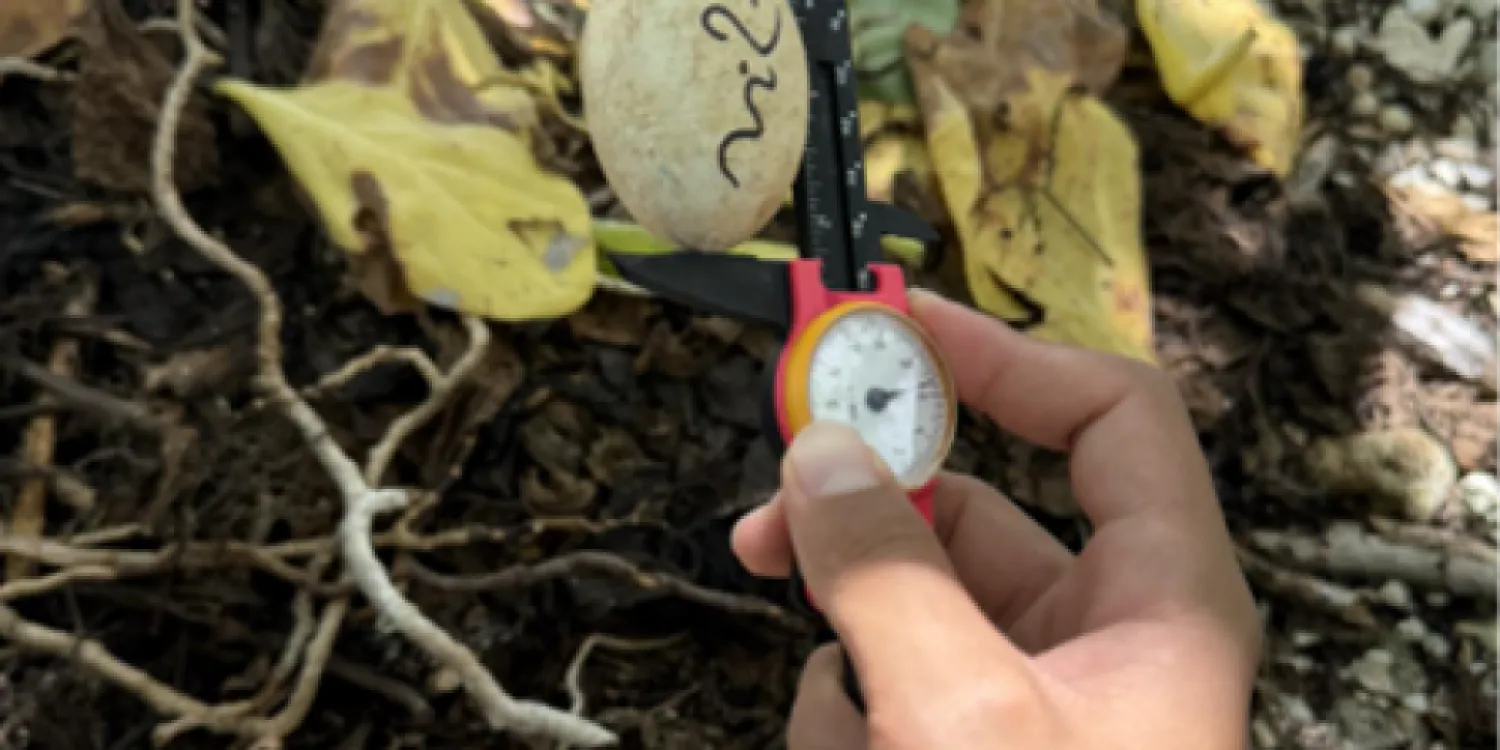
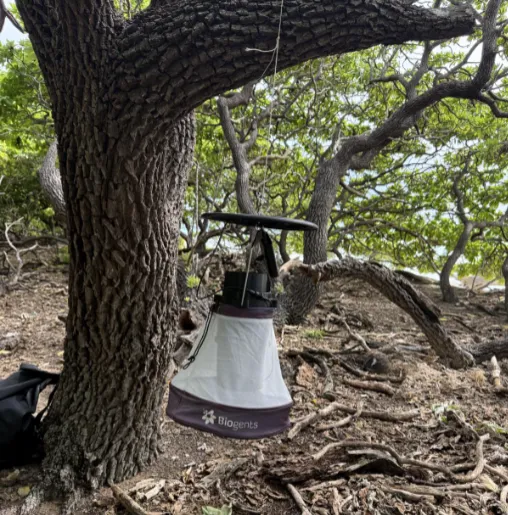
Mosquito capture campaigns were conducted simultaneously within the colonies. Cameras were installed near the nests to document any irritation or stress behaviors related to high mosquito density.
Several parameters were measured, including the distance from the nests to the vegetation line, the size of the eggs laid, and the development of the hatched eggs, from hatching to the flight stage.
Mosquitoes were captured within the colonies of the three motu in triplicate using BG-Pro traps, provided by Hervé Bossin's team (ILM de Paea). Targeted captures were also carried out directly at individual nests using adhesive devices.
Preliminary results:
Between January and July 2025, a total of 590 brown booby (Sula leucogaster) nests were recorded. The distribution of nests varies according to the sites studied, with 176 nests on Tahuna Iti, 265 nests on Horoatera, and 149 nests on Tiarauunu.
Outlook:
The next steps in the project will involve in-depth analysis of the data collected and correlating the nest inventory results with data from mosquito captures to assess their potential influence on the reproductive success of brown boobies (Sula leucogaster).
This analysis phase will be part of a scientific collaboration with Beth Gardner and Sarah Converse's team, aiming to cross-reference ecological parameters measured in the field with indicators of reproductive success.
In addition, a new field campaign is planned for October–November, in connection with the study of Tahinu phenology, in order to integrate seasonal vegetation dynamics into the interpretation of interactions between habitat, mosquitoes, and brown booby reproduction.