


Main objectives:
The project aims to study the ecophysiology of coral reef organisms in French Polynesia and to assess plastic pollution on the reefs of Tetiaroa. The main objectives are to quantify reef abundance and biodiversity, establish baseline estimates of microplastic concentrations, and analyze the ecology of key species such as corals, giant clams, and sea cucumbers. The project also focuses on plastic degradation in tropical environments and on characterizing microbiomes associated with reef organisms, biofilms, and plastic debris, in order to evaluate the impacts of plastic pollution on symbiotic relationships and organism responses to climate change.
Summary of field activities:
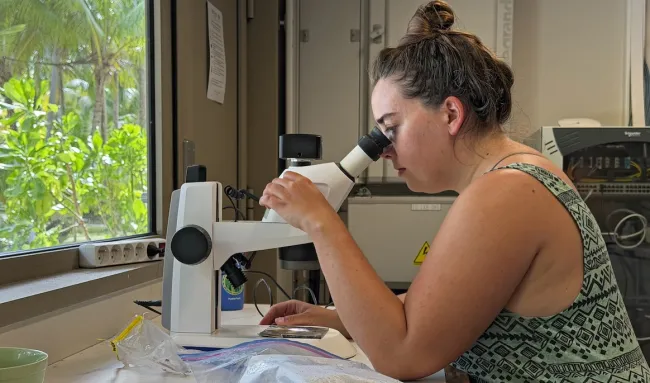
Fieldwork was mainly focused on the northern part of the atoll. The team recovered plastic samples that had been deployed for one year on the motus Tia'ra'aunu as part of an experiment investigating plastic degradation under natural conditions. Biofilm samples were collected from a subset of these plastics to characterize associated microbiomes. In parallel, ecological data and photographs were collected for giant clams and sea cucumbers to assess their abundance, diversity, color, and size.
Preliminary results:
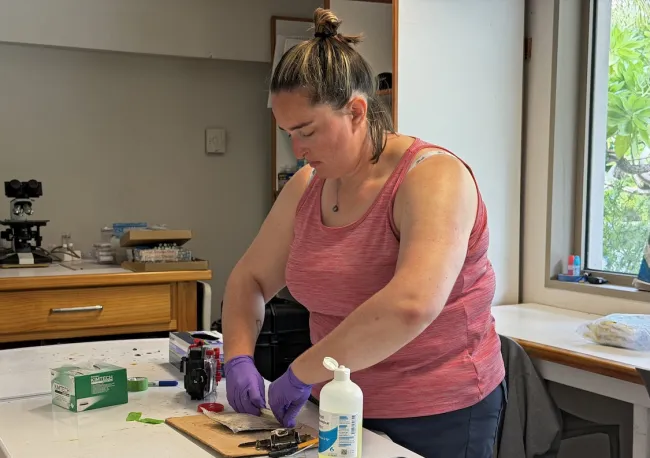
Some components of the project have been completed, including the analysis of microplastics in sandy sediments of the motus. These results allowed the characterization of the abundance and types of plastics present in the sands of Tetiaroa (Lasdin et al., 2026). Analyses of color data, physical properties, and microbiomes are currently ongoing. Initial investigations have also begun to characterize the abundance of corals, sea cucumbers, and giant clams. A scientific article resulting from research conducted at Tetiaroa was recently published in a special issue of Frontiers in Marine Science.
Perspectives / Next steps:
The next steps include obtaining the necessary permits to conduct experimental work, collect samples, and transport them to the United States for microbial and physiological analyses. Future research will focus on giant clam color and symbiosis, trace metal and microbial analyses, and experiments designed to assess how chemicals associated with plastics affect coral and clam behavior. A new field mission to Tetiaroa is planned for October/November 2026 to continue the project.